
Androsexual Opposite
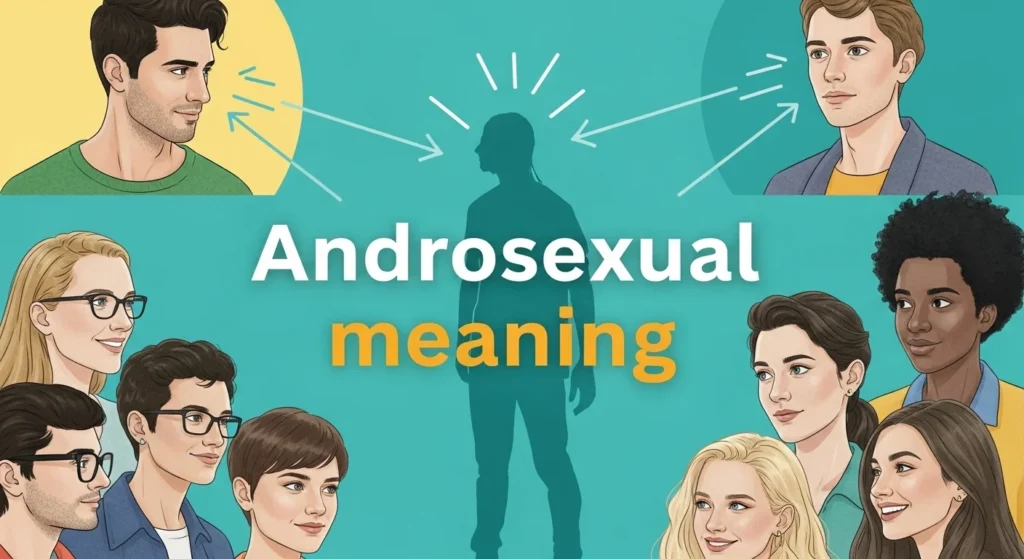
Androsexual opposite refers to gynesexuality (or gynosexuality). Androsexual means being attracted to masculinity or masculine-presenting people, while gynesexual means being attracted to femininity or feminine-presenting people.
In simple terms, androsexual = attraction to masculine energy, and its opposite = attraction to feminine energy. These terms focus on attraction to traits rather than gender identity.
Androsexual Flag
The androsexual flag represents people who are attracted to masculinity. It is used within LGBTQ+ communities to show identity and visibility.
The design typically includes shades of blue, green, and purple, symbolizing masculinity, attraction, and diversity. It helps people express their androsexual identity in a visual way.
Androgynosexual Meaning
Androgynosexual meaning refers to attraction toward androgynous people, meaning individuals who present a mix of masculine and feminine traits.
In simple terms, it describes attraction beyond traditional gender expression. It focuses on appearance and energy rather than strictly male or female categories.
Androsexual and Gynosexual
Androsexual and gynosexual are opposite attraction terms.
- Androsexual = attraction to masculinity
- Gynosexual = attraction to femininity
These terms help describe attraction more specifically, especially for people who don’t fit into traditional labels like straight or gay.
Androsexual for Women
Androsexual for women means a woman who is attracted to masculine-presenting people, regardless of gender identity.
For example, an androsexual woman may be attracted to men, masculine non-binary people, or anyone who expresses strong masculine traits.
Is Androsexual Valid
Is androsexual valid? Yes, it is a valid identity term within LGBTQ+ communities.
It is used to describe attraction based on masculinity rather than gender. While not everyone uses the label, it is widely accepted as part of modern sexual orientation language.
Autosexual Meaning
Autosexual meaning refers to a person who is primarily sexually attracted to themselves.
This can include self-admiration or self-focused attraction. It is a rare and often misunderstood term, and experiences may vary widely between individuals.
Is Androsexual Part of LGBTQ+
Is androsexual part of LGBTQ+? Yes, it is generally considered part of the broader LGBTQ+ umbrella.
It helps people describe their attraction in a more specific way. However, like many orientation labels, acceptance and usage can vary among individuals and communities.
What Does “Androsexual” Mean in Identity or Attraction?
Androsexual describes a person who is sexually or romantically attracted to masculinity, regardless of their own gender identity.
This is the simplest and most accurate definition.
Breaking it down
“Andro” comes from the Greek word andros, meaning male or masculine
“Sexual” refers to sexual or romantic attraction
So, androsexual meaning in identity discussions focuses on attraction to masculine traits, not necessarily attraction to men only.
Key clarification (very important)
Being androsexual does not automatically mean:
You are attracted only to cisgender men
You are straight or gay
You identify as male or female
Instead, androsexual people may be attracted to:
Masculine men
Masculine women
Masculine non-binary people
Anyone who expresses masculinity
The attraction is about gender expression (masculinity), not biological sex or assigned gender at birth.
Is androsexual the same as being gay or straight?
No. This is a common misunderstanding.
A woman attracted to masculinity might identify as androsexual
A non-binary person attracted to masculine people might prefer androsexual over gay or straight
A man attracted to masculinity could also identify as androsexual
Because of this flexibility, androsexual is often used by people who feel traditional labels don’t fully fit them.
How People Use “Androsexual” in Real Conversations
You’ll most often see androsexual in chat, bios, or profile descriptions rather than casual texting slang.
Common places you’ll see it
Dating apps (OkCupid, HER, Tinder bios)
LGBTQ+ forums and Reddit threads
TikTok identity discussions
Instagram bios
Discord communities
Educational or advocacy spaces
Examples of natural usage
People usually use androsexual when:
Explaining their attraction preferences
Avoiding gendered labels like “straight” or “gay”
Talking about attraction in a more inclusive way
For example:
“I’m androsexual, so I’m attracted to masculinity regardless of gender.”
“I identify as non-binary and androsexual.”
“Androsexual fits me better than straight or lesbian.”
When it feels appropriate vs awkward
Appropriate use
Identity discussions
Dating profiles
Educational contexts
LGBTQ+ safe spaces
Awkward or unnecessary use
Random casual chats with people unfamiliar with identity terms
As a joke or insult (which can feel dismissive)
Assuming someone else’s label
A good rule: people usually self-identify as androsexual—it’s not a label to assign to others.
Real-Life Examples of “Androsexual” in Conversations
Here are realistic, chat-style examples that show how the term is actually used, followed by clear explanations.
Example 1
Text:
“I’m androsexual, so I’m usually attracted to masculine energy, not a specific gender.”
Explanation:
This person is clarifying that masculinity is the key factor in their attraction, not whether someone is a man or woman.
Example 2
Dating bio:
“Non-binary | androsexual | loves coffee and late-night talks”
Explanation:
The user is sharing both their gender identity and attraction style so potential matches understand them better.
Example 3
Comment on social media:
“I used to think I was straight, but androsexual describes me more accurately.”
Explanation:
This shows how androsexual can help people who feel limited by traditional orientation labels.
Example 4
Forum post:
“What does androsexual mean? I’ve seen it on dating apps and was confused.”
Explanation:
This is a very common reason people search for “androsexual meaning slang” or “what does androsexual mean.”
Example 5
Chat reply:
“I don’t really care about gender, but masculinity attracts me—so androsexual fits.”
Explanation:
A casual but accurate description of the term in everyday language.
Common Mistakes & Misunderstandings About Androsexual
Even though the term is becoming more visible, misunderstandings are still very common.
Mistake 1: Thinking androsexual means “attracted only to men”
This is incorrect.
Androsexual = attraction to masculinity
Not all men are masculine
Not all masculine people are men
Mistake 2: Confusing androsexual with “straight” or “gay”
Androsexual is not defined by the gender of the person experiencing attraction, but by the type of traits they’re attracted to.
That’s why people of any gender can identify as androsexual.
Mistake 3: Assuming it’s a “new trend”
While the word has become more visible online in recent years, the concept has existed for a long time. Language simply evolved to describe it more clearly.
Mistake 4: Treating it like slang or a joke
Androsexual is not internet slang in the casual sense. It’s an identity-related term and should be used respectfully.
Mistake 5: Believing it excludes emotional attraction
Some androsexual people feel:
Sexual attraction
Romantic attraction
Both
Attraction styles vary from person to person.
Related Slangs & Abbreviations You Should Know
If you’re learning about androsexual, these related terms often appear alongside it.
Gynesexual
Attraction to femininity
The opposite concept of androsexual
Often confused with being attracted only to women (which is incorrect)
Bisexual
Attraction to more than one gender
Focuses on gender, not expression
Pansexual
Attraction regardless of gender
Less focused on masculinity or femininity specifically
Queer
An umbrella term for non-heteronormative identities
Some androsexual people prefer this broader label
Non-binary
A gender identity, not a sexual orientation
Many non-binary people use androsexual to describe attraction
These terms are often internally linked on educational or identity-focused websites to help readers explore further.
What Does Androsexual Mean in Text or Online Profiles?
When people search “what does androsexual mean in text”, they’re usually encountering it in:
A dating bio
A profile label
A comment explaining attraction
In short:
It’s not used like texting slang (LOL, BRB)
It’s used intentionally and thoughtfully
It signals openness and clarity about attraction
Think of androsexual as descriptive language, not shorthand.
Is Androsexual a Sexual Orientation?
This depends on how someone personally defines it.
Some people view androsexual as:
A sexual orientation
A romantic orientation
A descriptor of attraction rather than a full identity
There is no single “correct” way to use the label. The most important thing is how the individual identifies, not rigid definitions.
