
Hip Dysplasia Meaning
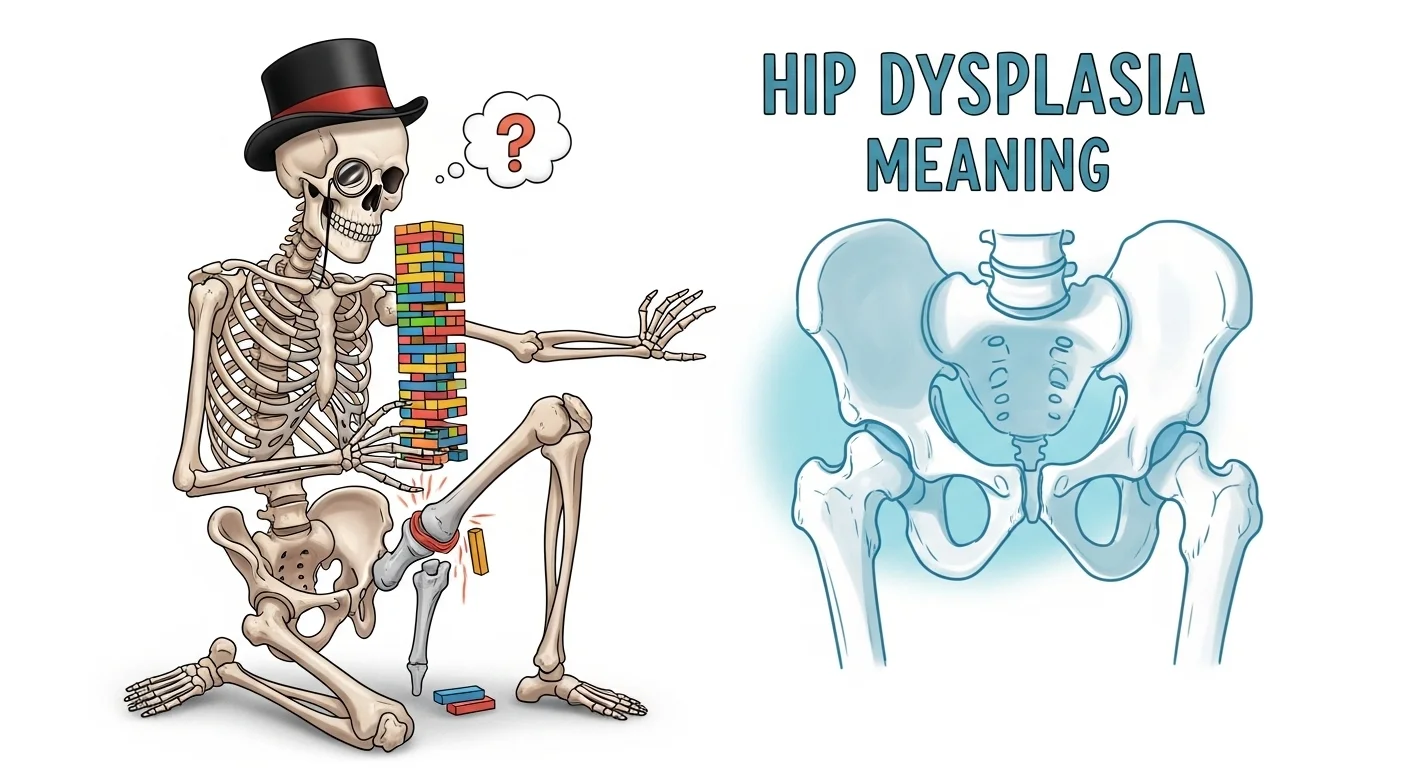
Hip dysplasia meaning refers to a condition where the hip joint does not form properly, causing the ball and socket to be misaligned.
This can lead to pain, instability, or arthritis over time if not treated.
Dysplasia Definition Pathology
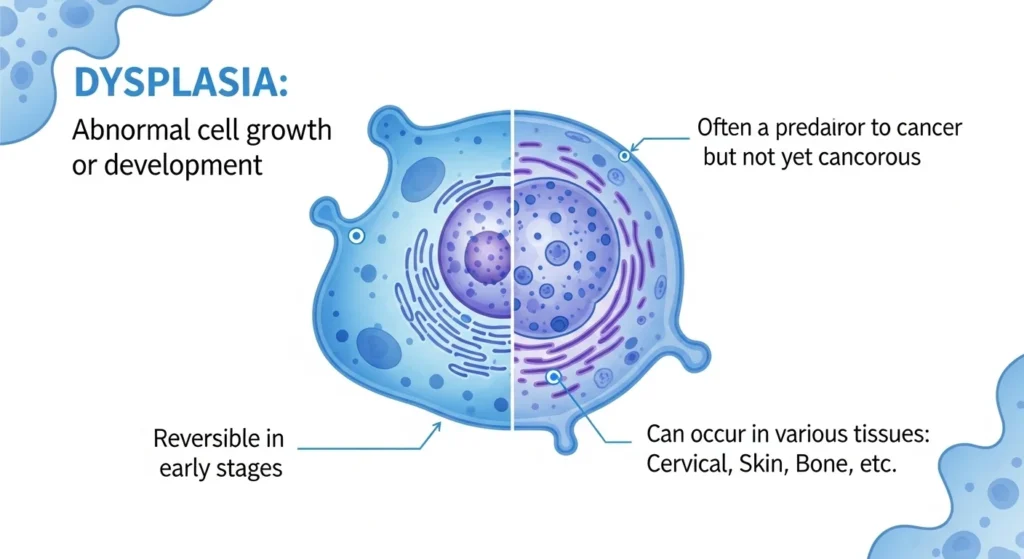
Dysplasia definition pathology is the abnormal development or growth of cells, tissues, or organs.
It is often considered a precancerous condition, depending on severity and location in the body.
Dysplasia Symptoms
Dysplasia symptoms vary depending on the area affected but may include:
- pain or discomfort
- abnormal tissue growth
- inflammation
- reduced function of the affected organ
Some cases may have no obvious symptoms early on.
Low-Grade Dysplasia Meaning
Low-grade dysplasia meaning refers to mild abnormal cell changes.
It is usually not cancer, but it may require monitoring to prevent progression.
High-Grade Dysplasia Meaning
High-grade dysplasia meaning refers to more severe abnormal cell changes.
It has a higher risk of developing into cancer if left untreated and often needs medical intervention.
Developmental Dysplasia Meaning
Developmental dysplasia meaning usually refers to developmental dysplasia of the hip (DDH).
It is a condition where a baby’s hip joint does not develop correctly before or after birth.
Cervical Dysplasia Meaning
Cervical dysplasia meaning refers to abnormal cell growth on the cervix.
It is often detected through Pap smears and may be linked to HPV infection. It can be mild, moderate, or severe.
Severe Dysplasia Meaning
Severe dysplasia meaning refers to advanced abnormal cell changes that are close to becoming cancerous.
It is a serious condition that usually requires prompt medical treatment or close monitoring.
What Does “Dysplasia” Mean in Medical or Everyday Contexts?
Dysplasia is a medical term used to describe abnormal growth or development of cells, tissues, or organs. It comes from the Greek words dys- meaning “bad” or “abnormal,” and -plasia meaning “formation.”
Key Points About Dysplasia:
Abnormal development: Cells or tissues grow differently from what’s considered normal.
Varies by location: Dysplasia can occur in bones, skin, cervix, or other organs.
Not always cancer: While some dysplasias can increase the risk of cancer, not all are dangerous.
Different Contexts of Dysplasia:
Skeletal Dysplasia: Refers to bone growth problems, often causing short stature or limb differences.
Cervical Dysplasia: Changes in cells of the cervix, often detected during Pap smears.
Skin Dysplasia: Abnormal skin growths that may need monitoring.
Origin in Medical History:
The term “dysplasia” has been used in pathology since the late 19th century to describe imperfect tissue development. Over time, it became a standard medical term in health reports, research papers, and online health forums.
How People Use “Dysplasia” in Real Conversations
While mostly a medical term, “dysplasia” sometimes appears in casual conversations, health blogs, or online forums. Understanding when it’s appropriate to use helps avoid confusion.
Platforms Where You Might See “Dysplasia”:
Texting or chatting with friends about health issues: “The doctor said I have mild dysplasia, so I need a follow-up.”
Instagram or TikTok health content: Short posts explaining conditions.
Discord or health forums: Users often share experiences or ask questions about symptoms.
Medical apps and telehealth messaging: Doctors may use it in messages to patients.
Appropriate vs. Awkward Use:
Appropriate: Discussing medical history with peers, asking questions in health forums, or sharing personal experiences.
Awkward: Using it casually like slang. For example, saying “I have dysplasia in my legs” without context might confuse friends.
Tip: When chatting about dysplasia, keep it simple: focus on what it affects and any recommended actions rather than the complex medical jargon.
Real-Life Examples of “Dysplasia” in Text Messages
Here are some relatable chat-style examples to help you understand how dysplasia might appear in real conversations:
Text with a friend:
Friend 1: “Hey, how was your doctor visit?”
Friend 2: “Got my Pap results back—mild cervical dysplasia. Need another checkup in 6 months.”
Explanation: Shows mild abnormal cell growth in the cervix; nothing immediately dangerous.
Family group chat:
Parent: “Did the X-ray show anything?”
Teen: “Yeah, they found skeletal dysplasia. Need to see a specialist.”
Explanation: Indicates bone growth differences.
Health forum post:
User: “Just diagnosed with skin dysplasia. Anyone else experience this?”
Explanation: Sharing experience to seek advice or support.
Doctor-patient chat on telehealth app:
Doctor: “We found dysplasia in the biopsy. We’ll monitor it closely.”
Explanation: Professional context; emphasizes monitoring and follow-up.
These examples show that dysplasia is usually used in serious, health-related contexts, not casual slang.
Common Mistakes & Misunderstandings
Even though it’s a standard medical term, people often get dysplasia wrong in everyday chats.
Common Confusions:
Mixing up dysplasia with cancer:
Dysplasia is not the same as cancer, but some types can increase cancer risk.Mispronouncing or misspelling:
People sometimes write “displasia” or say “dis-PLAY-zhuh,” which can confuse listeners.Using it in the wrong context:
Saying “I have dysplasia” without specifying the body part may lead to panic or misunderstanding.Overgeneralizing:
“I have dysplasia” doesn’t explain severity, location, or treatment plan. Being specific is key.
Related Slangs & Abbreviations
While dysplasia isn’t slang, understanding related medical abbreviations can help you follow online discussions:
CIN (Cervical Intraepithelial Neoplasia): Often mentioned alongside cervical dysplasia.
ASD (Atrial Septal Defect): Heart condition; sometimes discussed in congenital dysplasia contexts.
ACH (Achondroplasia): A form of skeletal dysplasia causing short stature.
HPV: Human papillomavirus; often linked with cervical dysplasia.
