
Ofrenda Meaning in English
Ofrenda meaning in English is “offering.” It refers to items placed on a special altar, usually during the Mexican tradition of the Day of the Dead (Día de los Muertos), to honor and remember deceased loved ones.
An ofrenda is not just a decoration—it is a meaningful display of remembrance. Families place photos, food, candles, and personal items to welcome the spirits of the departed. In simple terms, it is a heartfelt offering made to honor those who have passed away.
Ofrenda Meaning in Spanish
In Spanish, ofrenda directly means “offering” or “gift.” It comes from the verb “ofrecer,” which means “to offer.”
In cultural usage, especially in Mexico, it refers to an altar prepared during Día de los Muertos. The ofrenda represents love, respect, and spiritual connection with ancestors. It is a deeply meaningful tradition in Spanish-speaking cultures.
Ofrenda Meaning Catholic
In a Catholic context, ofrenda meaning Catholic refers to offerings made to God or saints as a sign of devotion, prayer, or gratitude.
While traditional Catholic offerings may include prayers, candles, or donations, the Day of the Dead ofrenda blends indigenous beliefs with Catholic traditions. It reflects a spiritual practice of honoring the dead while maintaining faith-based respect.
What Is the Purpose of an Ofrenda
The purpose of an ofrenda is to honor and remember loved ones who have passed away. It is believed that during Día de los Muertos, the spirits return to visit their families.
The ofrenda provides items they enjoyed in life, such as food, drinks, photos, and personal belongings. It serves as a bridge between the living and the dead, symbolizing love, memory, and connection.
Ofrenda in English Day of the Dead
In the context of Day of the Dead, an ofrenda in English is an altar of offerings. It is a central tradition of Día de los Muertos celebrations in Mexico.
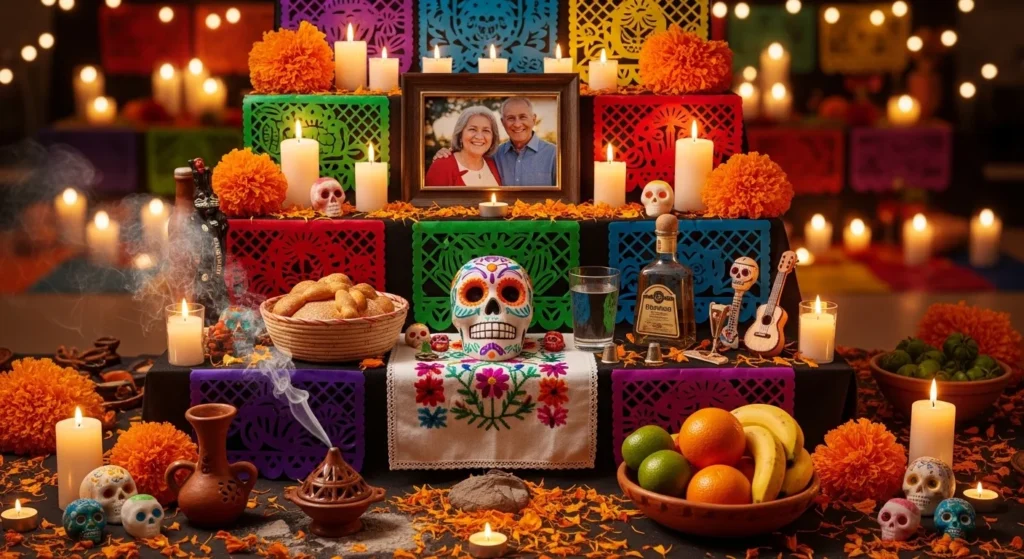
Families build colorful altars decorated with marigolds, candles, sugar skulls, and favorite foods of the deceased. Each item has symbolic meaning, helping guide and welcome spirits back to the world of the living.
Ofrenda Days
Ofrenda days refer to the days during Día de los Muertos when families prepare and display altars, typically around November 1st and 2nd.
Different days are dedicated to different spirits, such as children (Angelitos) and adults. During this time, families gather to celebrate, remember, and honor their loved ones with joy rather than sadness.
How Long Does an Ofrenda Stay Up
An ofrenda usually stays up for several days, most commonly from late October until November 2nd.
After Día de los Muertos ends, families carefully take down the altar. Some items are eaten or shared, while others are respectfully stored or returned to nature. The timing may vary by family tradition and region.
How to Make an Ofrenda
To make an ofrenda, families start by choosing a table or space to build the altar. It is usually decorated in levels representing heaven, earth, and the afterlife.
Common items include photos of loved ones, candles, marigold flowers, incense, water, and favorite foods of the deceased. Each element has symbolic meaning and is placed with care and respect. The goal is to create a warm and welcoming space for remembrance and spiritual connection.
What Does “Ofrenda” Mean in Chat or Text?
Ofrenda is a Spanish word that literally translates to “offering” in English. In Mexican culture, it specifically refers to a decorative altar created to honor deceased loved ones during Día de los Muertos.
Key Points About Its Meaning:
Primary Meaning: A physical or symbolic offering to remember and celebrate the dead.
Cultural Significance: Includes photos, food, candles, flowers (especially marigolds), personal items, and other objects that the deceased enjoyed in life.
Extended Use in Chat/Text: People may use “ofrenda” online to refer to any tribute or symbolic offering, even outside Mexican tradition—for example, a memorial post on Instagram.
Origin/History:
Ofrendas date back to pre-Columbian Mesoamerican civilizations, who honored ancestors with rituals and offerings.
The modern Día de los Muertos ofrenda combines indigenous practices with Catholic influences brought by Spanish colonizers.
How People Use “Ofrenda” in Real Conversations
Understanding how ofrenda is used in messages and social media posts can help you avoid miscommunication:
Platforms Where It Appears:
Texting: Friends sharing plans to build altars or post photos.
Instagram/TikTok: Posts highlighting Día de los Muertos setups.
Discord/Forums: Cultural discussion threads about Mexican traditions.
Travel Blogs & Guides: Used when explaining local customs.
When It’s Appropriate:
Talking about Día de los Muertos or Mexican traditions.
Sharing personal family traditions or cultural experiences.
Respectful cultural appreciation in educational contexts.
When It Feels Awkward or Wrong:
Using it to refer to random altars with no connection to remembrance.
Mislabeling a decorative display as an ofrenda without honoring ancestors.
Pro Tip: Use “ofrenda” to show respect and awareness of the tradition. It’s a meaningful term, not a generic decoration word.
Real-Life Examples of “Ofrenda” in Text Messages
Seeing examples helps solidify the meaning. Here are some chat-style scenarios:
Text Example:
Ana: “I set up my abuelo’s ofrenda for Día de los Muertos.”
Carlos: “It looks beautiful! Did you include his favorite foods?”
Explanation: Highlights the cultural and personal nature of an ofrenda.
Text Example:
Luna: “Just posted a pic of my ofrenda on Insta!”
Mateo: “Love seeing the candles and flowers!”
Explanation: Shows online sharing and appreciation.
Text Example:
Diego: “My ofrenda this year is simple, just photos and marigolds.”
Sofia: “Sometimes simplicity is the most meaningful.”
Explanation: Demonstrates that ofrendas can vary in size and detail but remain significant.
Common Mistakes & Misunderstandings
Even when people mean well, some mistakes pop up:
Confusing it with American Sign Language: “Ofrenda” is not a gesture or hand sign.
Using it for generic altars: Only tributes for the deceased are truly ofrendas.
Tone Misinterpretations: Sharing pictures without context can seem superficial or disrespectful.
Literal Translation Pitfalls: Don’t just call it a “gift”—the spiritual and cultural context matters.
Related Slangs & Abbreviations
In chat and social media, you might see related cultural or shorthand terms:
Día de los Muertos: The holiday where ofrendas are central.
Marigolds (cempasúchil): Flowers commonly placed on ofrendas.
Altar: English synonym sometimes used in online descriptions.
Calaveras: Sugar skulls often featured on ofrendas.
Altarcito: A smaller, informal version of an ofrenda.
