
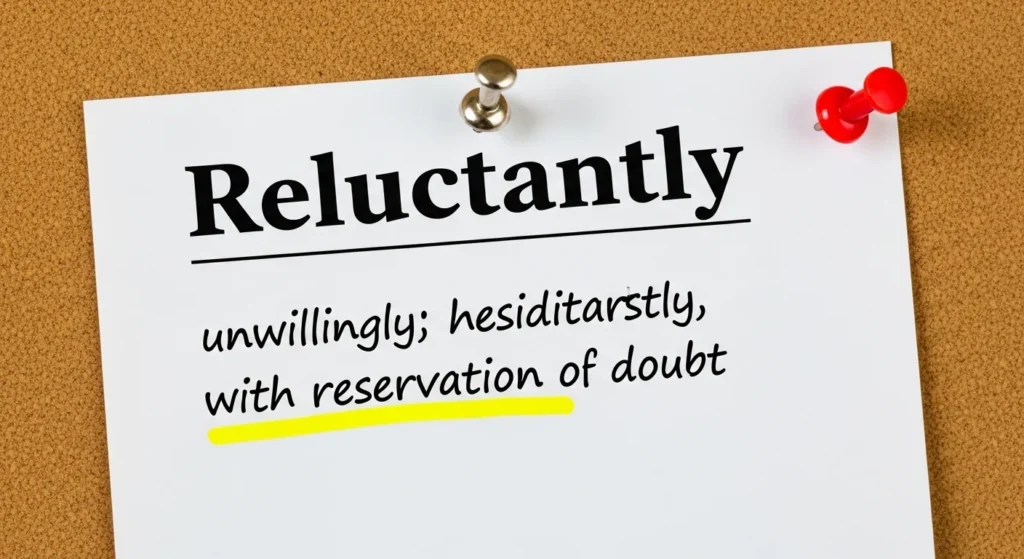

What Does “Reluctantly” Mean? (Simple Definition)
Reluctantly meaning:
👉 Doing something without enthusiasm or willingness
👉 Acting against your own desire
👉 Agreeing, but not happily
Easy explanation:
If you do something reluctantly, you don’t really want to do it, but you still do it.
Example idea:
- You go to school reluctantly → You don’t want to go, but you still go.
Reluctantly Synonym (Similar Words)
Here are common reluctantly synonym words that mean almost the same thing:
- Unwillingly
- Hesitantly
- Grudgingly
- Against one’s will
- Slowly (in emotional sense)
- With hesitation
Example:
- She reluctantly agreed
→ She grudgingly agreed
Reluctantly Antonyms (Opposite Words)
The opposite of reluctantly is doing something with happiness or willingness.
Antonyms of reluctantly:
- Willingly
- Happily
- Eagerly
- Freely
- Enthusiastically
Example:
- He reluctantly helped
→ He eagerly helped (opposite meaning)
Reluctantly Pronunciation
Reluctantly pronunciation:
👉 /rih-LUK-tuhnt-lee/
Easy breakdown:
- re = rih
- luc = luk
- tant = tuhnt
- ly = lee
So you say it like:
👉 rih-luk-tuhnt-lee
Reluctantly Meaning in Farsi
In Persian (Farsi), reluctantly meaning in Farsi is:
👉 با اکراه (ba ekrah)
👉 ناخواسته (nakhwāsteh)
👉 با بیمیلی (ba bī-meyli)
Simple explanation:
It means doing something without desire or willingly.
Reluctantly Meaning for Kids
Simple kid-friendly meaning:
“Reluctantly” means you do something even if you don’t want to do it.
Example for kids:
- I reluctantly ate vegetables
→ I didn’t want to eat them, but I did - She reluctantly went to bed early
→ She didn’t want to sleep but had to
Reluctantly in a Sentence (Examples)
Here are simple and clear examples of reluctantly in a sentence:
- He reluctantly said yes to the plan.
- She reluctantly cleaned her room.
- I reluctantly agreed to help my friend.
- They reluctantly left the party early.
- The student reluctantly answered the question.
Each meaning:
In all these sentences, the person is doing something they don’t really want to do.
Albeit Reluctantly Meaning
Albeit reluctantly meaning:
👉 It means “although unwillingly”
Simple explanation:
It is used when someone does something, even though they are not happy about it.
Example:
- He agreed, albeit reluctantly.
→ He agreed, but he was not happy about it.
Common Usage of “Reluctantly” in Real Life
People use reluctantly meaning in sentence in daily life when:
- Agreeing to something they dislike
- Following rules they don’t enjoy
- Accepting decisions they disagree with
- Doing tasks they find boring or hard
Example situations:
- Going to school
- Doing homework
- Helping someone
- Following strict rules
Quick Summary
- Reluctantly meaning: Doing something unwillingly
- Synonyms: unwillingly, hesitantly
- Antonyms: willingly, eagerly
- Pronunciation: rih-luk-tuhnt-lee
- Farsi meaning: با اکراه / ناخواسته
- Usage: shows lack of willingness
What Does “Reluctantly” Mean in Chat or Text?
At its core, “reluctantly” means doing something with hesitation or unwillingness. It conveys that someone is taking an action they don’t fully want to do, often because they feel obligated or pressured.
Formal definition: “In a way that shows hesitation, unwillingness, or resistance.”
Casual chat meaning: In texting or social media, it often signals that the sender isn’t thrilled about a choice or action—but is going along with it anyway.
Context matters:
Reluctantly in texting: Shows a subtle complaint or “ugh” feeling without explicitly saying it.
Reluctantly in captions or posts: Often adds humor or drama to a situation (“Reluctantly leaving the party… wish I could stay”).
Origins: The word comes from Latin roots: reluctari meaning “to struggle against.” Over time, it became part of English vocabulary for expressing hesitation or unwillingness, and eventually migrated into everyday online and chat usage.
How People Use “Reluctantly” in Real Conversations
“Reluctantly” is versatile in digital communication. Here’s how it appears across platforms:
Texting/WhatsApp: A quick note about doing something you’d rather avoid.
Instagram/Facebook captions: Adds a dramatic or humorous flair to posts.
Discord/Reddit forums: Signals reluctance in a discussion or reaction.
Snapchat/TikTok captions: Often used for comedic exaggeration or sarcasm.
When it works best:
To convey mild annoyance or hesitation without sounding rude.
To soften a “no” or a complaint.
When it’s awkward:
Overusing it in professional messages can make you seem indecisive.
Using it sarcastically where tone isn’t clear can confuse readers.
Pro tip: In casual chats, pairing “reluctantly” with emojis, GIFs, or text formatting can help clarify tone—but even without them, it still communicates hesitation clearly.
Real-Life Examples of “Reluctantly” in Text Messages
Here are some short, realistic examples of how “reluctantly” shows up in modern messaging:
Friend invites you out:
“Reluctantly agreeing to go to the gym… ugh.”
Explanation: You’re going, but you’re not excited about it.
Group project chat:
“I’ll reluctantly help with the presentation… don’t expect me to do much.”
Explanation: Signals willingness under protest.
Casual humor:
“Reluctantly trying my sibling’s cooking… pray for me.”
Explanation: Adds exaggeration for comedic effect.
Dating app conversation:
“Reluctantly swiping right… you seem interesting though.”
Explanation: Shows playful hesitation without offense.
Work context:
“Reluctantly submitting the report early… but it’s done!”
Explanation: Communicates the action was done, though not with enthusiasm.
Common Mistakes & Misunderstandings
Even simple words like “reluctantly” can be misused:
Confusing it with American Sign Language (ASL) abbreviation: Some users may see “reluctantly” and think it’s shorthand or slang—it’s not.
Wrong context: Using it in overly casual messages with authority figures may seem passive-aggressive.
Tone misinterpretation: Without context or tone, it can sound sarcastic or rude.
Tip: Pair it with context clues or mild humor to prevent confusion.
Related Slangs & Abbreviations
If you like using “reluctantly,” you might encounter these similar terms:
begrudgingly: Almost the same as reluctantly, but slightly more formal.
half-heartedly: Doing something with little enthusiasm.
meh: Short slang expressing indifference, can pair with reluctant actions.
ugh/fine: Casual ways to show hesitation or complaint.
