
Unalienable meaning can be confusing at first, but once you understand it, it becomes a powerful tool to make your conversations, debates, and writing more precise. Many people struggle with using it correctly, which leads to frustrating misunderstandings.
This guide will walk you through the unalienable meaning, its history, and practical examples. By the end, you’ll feel confident spotting the term in texts, social media, or discussions—and even using it without awkward mistakes.
What Does “Unalienable” Mean in Text or Conversation?
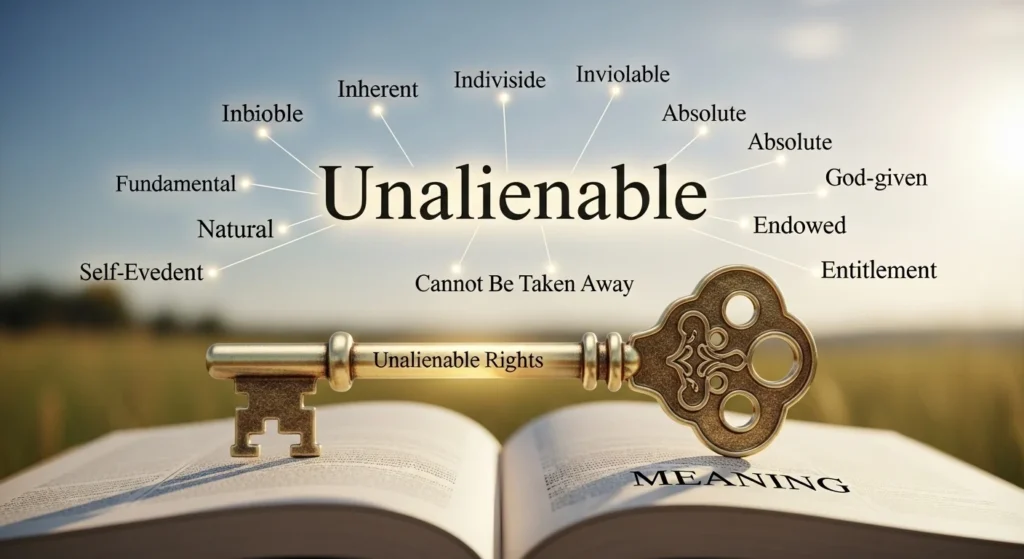
At its core, unalienable refers to something that cannot be taken away, transferred, or surrendered. It is often used to describe fundamental rights or privileges that are inherent to every person.
Key points about unalienable meaning:
-
Cannot be taken away: Rights or attributes you naturally possess.
-
Cannot be sold or transferred: Unlike personal property, unalienable rights stay with you.
-
Often used legally or philosophically: Appears in foundational documents like the U.S. Declaration of Independence.
Origins and History
The word unalienable has roots in early English legal and philosophical texts. While it is closely linked with the term “inalienable,” unalienable became prominent in the 1776 Declaration of Independence, describing rights such as life, liberty, and the pursuit of happiness.
How People Use “Unalienable” in Real Conversations
Even though it’s a historical term, unalienable occasionally pops up in modern chat, social media, and casual discussions—especially in debates about rights, fairness, or moral principles.
Platforms
-
Texting & Messaging: Short discussions about fairness, freedom, or personal boundaries.
-
Social Media: Twitter/X threads, Instagram captions, or LinkedIn posts discussing ethics or law.
-
Forums & Discord: Debates about human rights, philosophy, or politics.
-
Academic Discussions: Students may reference “unalienable” when summarizing historical texts.
When it’s appropriate vs awkward
-
Appropriate: Serious discussions about rights, equality, or law.
-
Awkward: Overusing it in casual conversations like memes or jokes, where simpler words like “fundamental” might feel more natural.
Real-Life Examples of “Unalienable” in Text Messages
Here are some examples of how people might use unalienable in modern chats:
-
Example:
Friend 1: “I can’t believe they took away our vacation days!”
Friend 2: “Honestly, some things feel unalienable. Everyone deserves breaks.”
Explanation: Friend 2 uses it to stress that certain rights should never be removed. -
Example:
Student 1: “We learned about life, liberty, and property today.”
Student 2: “Right, those are unalienable rights.”
Explanation: Highlights the original historical use. -
Example:
Online Debate: “Freedom of speech is unalienable—it’s non-negotiable.”
Explanation: Emphasizes inherent, non-transferable rights in online discussions. -
Example:
Text to a friend: “Honestly, self-respect is unalienable.”
Explanation: Shows casual use for personal attributes or moral principles. -
Example:
Forum Post: “Healthcare might feel unalienable, but policy changes prove otherwise.”
Explanation: Discussing societal rights while using the term in a thoughtful debate.
Common Mistakes & Misunderstandings
Even though unalienable is straightforward, people often misuse it:
-
Confusing it with “inalienable”: Both mean the same, but “unalienable” is historically tied to the Declaration of Independence.
-
Using it for trivial things: Calling your coffee “unalienable” is humorous, but technically incorrect.
-
Misinterpreting tone: It’s a formal word; casual use may come off as overly dramatic.
Tips:
-
Reserve it for rights, ethics, or serious personal principles.
-
Substitute with simpler terms like “fundamental” when casual clarity matters.
Related Slangs & Abbreviations
While unalienable isn’t exactly a slang term, some online discussions use related phrases or shorthand:
-
Inalienable: Interchangeable in meaning.
-
Basic rights: Casual synonym for “unalienable rights.”
-
Non-negotiable: Informal way to express unalienable principles.
-
Fundamental rights: Common in social media and academic posts.
FAQs
1. What is the difference between unalienable and inalienable?
Both mean the same: rights or privileges that cannot be taken away. “Unalienable” is more historic and tied to the U.S. Declaration of Independence.
2. Can unalienable be used in casual conversation?
Yes, but it works best for serious topics like rights, ethics, or personal principles. Using it for everyday objects can feel out of place.
3. Is unalienable still relevant today?
Absolutely. The term appears in legal, philosophical, and social contexts, reminding us of inherent rights.
4. How do I know when to use unalienable vs fundamental?
Use unalienable for formal or historical contexts. Use fundamental for simpler, everyday explanations of basic principles.
5. Why is unalienable often mentioned online?
It’s commonly referenced in debates about human rights, freedom, and fairness, making it a relevant term in social media discussions and text threads.
Conclusion
Understanding unalienable meaning is more than a vocabulary lesson—it’s a way to grasp essential human rights and principles that shape history and modern conversations. Remember: unalienable refers to things that cannot be taken away, transferred, or surrendered, whether rights, freedoms, or core personal principles.
Next time you see it in texts, posts, or debates, you’ll know exactly what it means—and you can even use it confidently yourself.
What’s your favorite chat abbreviation or formal term you see online? Drop it in the comments!