
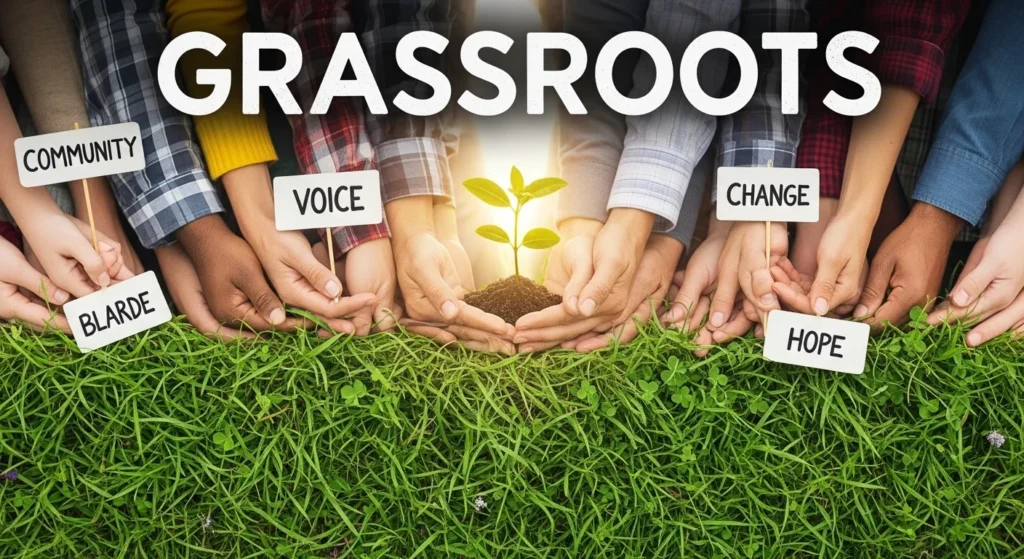
Grassroots meaning is more than just a buzzword — it’s the secret behind movements, trends, and ideas that start with everyday people. Whether you’ve seen it in online debates, social posts, or casual chats, understanding it gives you an edge in reading conversations and spotting authentic people-powered actions.
In real life, grassroots can feel exciting and inspiring, but it can also be confusing or misleading if used incorrectly. From politics to social projects, knowing the grassroots meaning helps you see who’s really driving the change — and when something’s just pretending to be “from the people.” Let’s break it down clearly and simply.
What Does “Grassroots” Mean in Chat or Text?
Grassroots means something that starts with regular people at a local or community level, rather than being led by powerful organizations, governments, or big companies.
In chat, articles, or online discussions, “grassroots” usually describes:
Movements started by everyday people
Ideas spreading naturally, not through paid promotion
Community-driven efforts
Bottom-up change instead of top-down control
Simple definition:
Grassroots = from the people, not from the top.
Different meanings based on context:
The meaning stays similar, but the focus changes depending on where it’s used:
Politics: Voters organizing locally instead of party leaders controlling everything
Social movements: Communities pushing change without corporate backing
Business & startups: Small creators growing organically before going mainstream
Internet culture: Trends that go viral naturally, not through ads
Where did the term “grassroots” come from?
The word comes from agriculture — grassroots literally refers to roots growing in the soil. Over time, people started using it as a metaphor:
Roots = everyday people
Soil = local communities
Growth = change happening naturally
Unlike chat abbreviations, grassroots isn’t internet slang, but it is widely used online, especially in discussions about activism, culture, and community power.
How People Use “Grassroots” in Real Conversations
You’ll see grassroots used across many platforms — from serious news articles to casual social posts.
Common platforms where it appears:
Text messages (especially political or social discussions)
Twitter / X
Instagram captions
Reddit threads
Discord servers
Online forums
News comments
LinkedIn posts
How it sounds in everyday language:
People often use “grassroots” to give credit to regular people instead of institutions.
Examples of how it’s meant emotionally:
Respectful
Empowering
Authentic
Community-focused
When it’s appropriate:
Talking about community action
Describing organic growth
Highlighting people-powered change
Praising local involvement
When it can feel awkward or forced:
Using it just to sound smart
Applying it to something clearly corporate-led
Calling a heavily funded campaign “grassroots”
A good rule: If regular people didn’t start or drive it, it’s probably not grassroots.
Real-Life Examples of “Grassroots” in Text Messages
Here are realistic, chat-style examples showing how people actually use the word — plus what each one means.
Example 1:
“Bro this whole thing started as a grassroots movement on Reddit.”
Meaning:
Regular users started it naturally, without a company or authority pushing it.
Example 2:
“She won the election because of strong grassroots support.”
Meaning:
Local people volunteered, donated, and spread the message themselves.
Example 3:
“That brand blew up from grassroots marketing, not ads.”
Meaning:
People shared it organically instead of paid promotions.
Example 4:
“The protest wasn’t organized by any group, it was totally grassroots.”
Meaning:
No official leaders — just people coming together on their own.
Example 5:
“It feels more authentic when it’s grassroots.”
Meaning:
It feels real, honest, and community-driven.
Common Mistakes & Misunderstandings
Even though the word is popular, people still misuse it. Here are the most common mistakes.
1. Thinking grassroots means “small”
Grassroots does not mean weak or unimportant.
Many huge movements started grassroots and later became global.
2. Using it for corporate-led campaigns
If a big company funds, plans, and controls it, it’s not grassroots, even if they pretend it is.
This is often called “astroturfing” — fake grassroots activity.
3. Confusing it with online slang
Grassroots is not a texting abbreviation or meme slang. It’s a real English term used online.
4. Assuming it only applies to politics
Politics is common, but grassroots applies to:
Social causes
Art communities
Tech projects
Gaming communities
Online trends
5. Tone misunderstandings
Calling something grassroots can sound:
Positive (authentic, people-powered)
Critical (unorganized, lacking resources)
Context matters.
Related Terms & Similar Words
If you’re learning the grassroots meaning, these related terms often appear nearby and are worth knowing.
Bottom-up
Change that starts with individuals rather than leaders.
Community-driven
Led by people who actually use or care about the thing.
Organic growth
Growing naturally without paid promotion.
People-powered
Fueled by public support instead of institutions.
Local movement
Focused on neighborhoods or small communities.
These are great opportunities for internal linking if you’re building a meaning-based or slang-education website.
Why “Grassroots” Matters in 2026
In 2026, the internet has made grassroots efforts more powerful than ever.
Why?
Social media removes gatekeepers
Communities organize instantly
One viral post can start a movement
Trust in institutions is lower
People value authenticity more
That’s why the term keeps trending in:
Politics
Creator economy
Online activism
Decentralized communities
Understanding grassroots meaning helps you read between the lines when brands, influencers, or politicians use the word.
Frequently Asked Questions (FAQs)
What does grassroots mean in simple words?
Grassroots means something started and supported by ordinary people, not by powerful organizations or leaders.
Is grassroots only used in politics?
No. While common in politics, it’s also used in business, social movements, internet culture, and community projects.
Is grassroots a positive or negative term?
Mostly positive. It suggests authenticity and real public support, though context can change the tone.
Can a big movement still be grassroots?
Yes — if it started with regular people and grew naturally before gaining larger attention.
Is grassroots the same as viral?
Not exactly. Viral means fast spread. Grassroots means people-driven. Something can be both, but they’re not the same.
Final Thoughts: Grassroots, Explained Clearly
To sum it up:
Grassroots means from the people
It starts locally and grows naturally
It’s driven by community, not authority
It’s about authenticity and real support
If you ever see someone describe something as grassroots, now you’ll know exactly what they mean — and whether they’re using the word honestly.
What’s your favorite word or phrase that confuses people online? Drop it in the comments and let’s break it down next.