
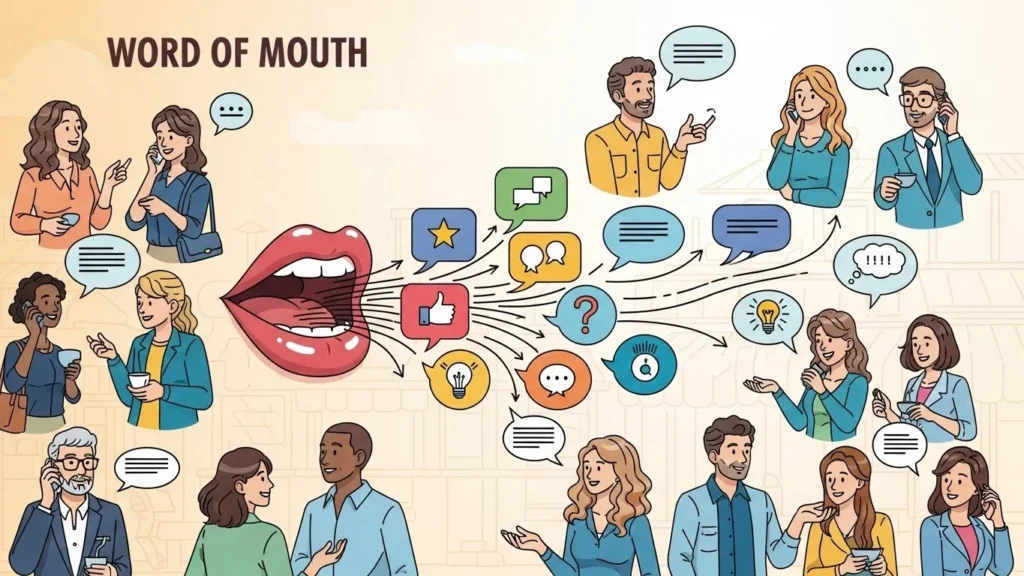

Word of Mouth Marketing
Word of mouth marketing is one of the most powerful ways businesses grow organically. It occurs when satisfied customers share their positive experiences with friends, family, or colleagues, creating authentic promotion without paid advertising. This type of marketing builds trust quickly because people tend to value recommendations from people they know over traditional ads. Companies often encourage word of mouth marketing through referral programs, exceptional customer service, and creating memorable experiences that people naturally want to talk about.
Word-of-Mouth Meaning in Business
In business, word-of-mouth refers to the informal transmission of information, opinions, or recommendations about a product, service, or brand. It can have a significant impact on a company’s reputation and sales because potential customers often trust peer recommendations more than promotional campaigns. Positive word-of-mouth can increase brand loyalty, customer retention, and overall credibility, making it an essential component of any marketing strategy.
Word of Mouth Meaning Slang
In slang or casual usage, word of mouth can simply mean “what people are saying” or “rumors” about someone or something. For example, in social conversations, you might hear, “Word of mouth is that the new cafe downtown is amazing.” Here, it’s an informal way of referring to personal opinions or shared experiences circulating among a group.
Word of Mouth Meaning and Examples
Word of mouth is essentially people talking about a product, service, or experience, either positively or negatively. For example, if a friend recommends a movie because they loved it, that’s positive word of mouth. In business, a restaurant gaining popularity because customers rave about it online and offline is another example. Word of mouth is effective because it’s genuine, trustworthy, and can influence decisions more than advertisements.
Word of Mouth Synonym
Some common synonyms for word of mouth include “referral,” “recommendation,” “buzz,” “oral recommendation,” and “testimonial.” These terms are often used interchangeably in marketing contexts to describe the spread of information through personal communication rather than formal advertising.
Word of Mouth Meaning Job Application
In the context of a job application, word of mouth can refer to personal referrals or recommendations from someone within a company or network. Candidates often get job opportunities because someone recommended them based on their skills, reputation, or past work experience. Positive word of mouth in professional circles can significantly enhance career prospects.
Word-of-Mouth in a Sentence
Here’s how you can use word-of-mouth in a sentence: “The local bakery grew rapidly thanks to word-of-mouth advertising from satisfied customers.” This shows the influence personal recommendations can have on a business’s success.
Good Word of Mouth Meaning
Good word of mouth refers to positive opinions and recommendations that enhance a person, product, or business’s reputation. For instance, when customers praise a brand online or tell friends about their excellent service, it’s considered good word of mouth. Businesses often strive for good word of mouth because it increases credibility, attracts new customers, and strengthens loyalty.
What Does “Word of Mouth” Mean in Chat or Text?
Word of mouth literally refers to the process of sharing information verbally from person to person. In chat or text, it often keeps that same meaning but can also appear in slightly different contexts depending on the conversation.
Primary meaning: Information shared directly from one person to another, usually informally.
Marketing meaning: When people recommend products, services, or content to others without any official promotion — basically free advertising.
Casual texting meaning: Could be used jokingly or informally, like “I heard about that game word of mouth,” meaning you learned it through friends rather than online research.
Origin: The phrase comes from the literal act of speaking (“mouth”) to spread news (“word”). Its roots go back centuries but became especially popular in marketing and social media culture over the last few decades.
How People Use “Word of Mouth” in Real Conversations
“Word of mouth” appears in a variety of platforms and situations:
Texting: Sharing news, gossip, or recommendations
Example: “I got that new app word of mouth, it’s actually really fun.”
Instagram & Snapchat: Often in captions or stories to credit friends for recommendations
Discord & Gaming Forums: Used to share tips or alert friends about games or events
Dating apps: Mentioning hobbies or favorite spots discovered via friends
Professional or casual marketing: Highlighting personal recommendations
When it’s appropriate:
Talking about recommendations or things you’ve heard personally
Explaining how you discovered something
When it’s awkward:
Using it in a formal email without context
Overusing it for trivial information, e.g., “I found out word of mouth that my neighbor bought milk”
Pro Tip: It’s best when it feels natural and casual, not forced.
Real-Life Examples of “Word of Mouth” in Text Messages
Here are some relatable scenarios:
Texting a friend about a new restaurant:
“Hey, I tried that new sushi place word of mouth — it’s amazing!”
Meaning: You heard about the restaurant from someone else, not online reviews.
Sharing a gaming tip:
“Got the secret level word of mouth from Alex, it’s hidden behind the waterfall.”
Recommending a movie:
“Saw that new thriller word of mouth, and wow, it’s intense!”
Talking about trends:
“Everyone’s talking about that challenge word of mouth, did you see it?”
Promoting a local event:
“The concert next week is sold out, but I heard it word of mouth you might get last-minute tickets.”
Explanation: In each case, “word of mouth” signals that the info came from someone’s personal recommendation rather than an official source.
Common Mistakes & Misunderstandings
Even though “word of mouth” seems simple, people sometimes misinterpret it:
Confusing it with written sources: It’s verbal or personal, not from an article or website.
Overusing it in professional writing: Can sound too casual or vague.
Misinterpreting tone: Can come off as gossip if not used carefully
Assuming online posts count: Word of mouth is traditionally personal, not social media ads (even if you share online).
Tip: Always clarify if the recommendation is personal or online to avoid confusion.
Related Slangs & Abbreviations
Here are some similar chat terms:
FWIW (For What It’s Worth): Casual advice or opinion, often personal like word of mouth
IRL (In Real Life): Can imply info you heard from someone personally
TBH (To Be Honest): Often paired with recommendations or personal opinions
Rec / Recommendation: Directly suggesting something, often based on word of mouth
Hearsay: More formal, sometimes jokingly used in chat for second-hand info
