

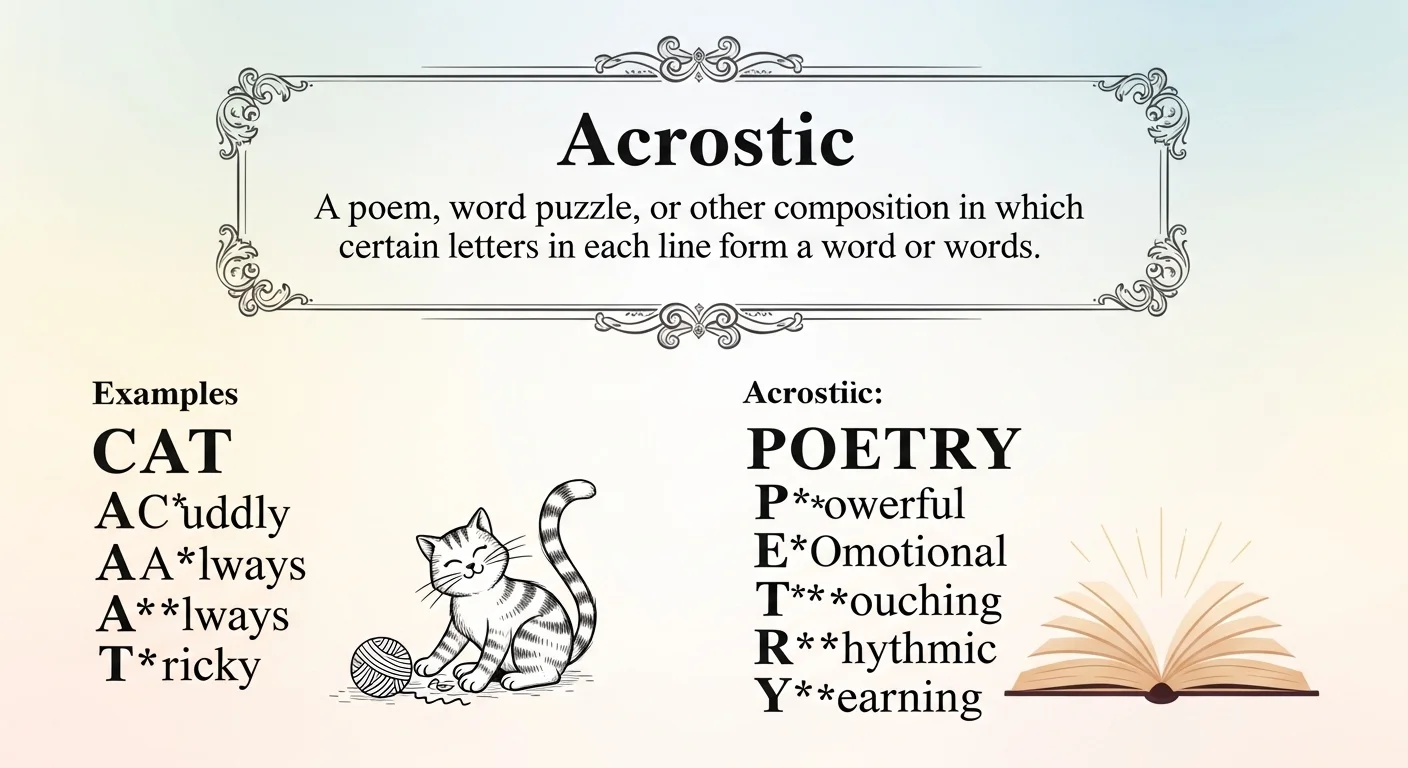
Acrostic Meaning and Examples
An acrostic is a type of writing in which the first letters of each line or paragraph spell out a word, phrase, or message when read vertically. This creative style is often used in poetry, educational exercises, and fun word games to make learning engaging. For example, the word “HOPE” could be turned into an acrostic poem like: “Happiness opens paths endlessly.” Acrostics are versatile, allowing writers to blend meaning, creativity, and hidden messages in a single piece of text. They can be simple or complex, making them accessible for beginners and fun for advanced writers alike.
Acrostic Examples
Acrostic examples help illustrate how letters form meaningful messages. A classic example is the word “LOVE”:
- L – Laugh every day
- O – Open your heart
- V – Value every moment
- E – Embrace life fully
These examples show how acrostics can combine inspiration, education, and entertainment. Teachers, poets, and content creators use acrostics to teach vocabulary, reinforce concepts, or simply add a creative twist to writing.
Acrostic Poem
An acrostic poem is a poem where the first letters of each line spell out a word or phrase related to the poem’s theme. These poems are popular in classrooms because they encourage creative thinking while practicing language skills. For instance, an acrostic poem for “SUN” might read:
- S – Shining bright above
- U – Uplifting every day
- N – Nature’s golden ray
Acrostic poems can be simple, fun, or even deeply symbolic, making them a versatile literary tool for all ages.
Acrostic Meaning Slang
In slang or casual use, acrostic sometimes refers to abbreviations or phrases created from the first letters of a word or sentence, especially online or in text messaging. For instance, “YOLO” (You Only Live Once) can be treated as a modern acrostic in social media communication. While this usage is informal, it still follows the same principle of letters representing words or messages in a clever and condensed way.
Acrostic Meaning in English
In English, the word acrostic originates from the Greek words “akros” (highest) and “stichos” (line), meaning “highest line.” In practical terms, it refers to writing where the first letters of each line or segment spell out a word or message. This definition applies to poems, puzzles, and word games, emphasizing creativity, hidden meaning, and literacy skills. English teachers and writers often use acrostics to teach vocabulary, reinforce learning, or inspire playful writing.
Acrostic Meaning in Literature
In literature, an acrostic is a deliberate literary device used to convey hidden messages, themes, or authorial signatures. Historical and classical texts often included acrostics to encode names, dates, or moral lessons. Poets and authors use acrostics to add a layer of depth and meaning to their work, allowing readers to engage with text on multiple levels. In modern literature, acrostics appear in children’s books, puzzles, and creative writing exercises to make reading interactive and imaginative.
Pronounce Acrostic
The word acrostic is pronounced “uh-KROS-tik”, with the emphasis on the second syllable. Knowing the correct pronunciation helps in reading aloud, teaching, and discussing literary terms confidently. It’s a straightforward word, but pronouncing it correctly adds clarity when explaining its meaning to students or peers.
Acrostic Meaning for Kids
For kids, an acrostic is a fun way to play with words while learning letters and meanings. Kids can create acrostics with their names, favorite animals, or concepts like “FRIEND” or “FUN.” For example, the name “SAM” could be an acrostic like:
- S – Smiles a lot
- A – Always kind
- M – Makes friends easily
Acrostics help children practice spelling, enhance creativity, and understand the relationship between letters and words in an engaging way.
What Does “Acrostic” Mean in Chat or Text?
An acrostic is a type of writing where the first letter (or sometimes the last letter) of each line spells out a word or message. This technique can appear in poems, notes, or even online texts.
Key points about acrostics:
Definition: A text in which letters in a vertical line form a word or phrase.
Purpose: Often used for emphasis, hidden messages, or creative expression.
History: Acrostics date back to ancient Greek and Latin literature. Poets and writers used them for secret messages or as a mnemonic device.
Modern Chat Use: Today, people might use acrostics in Instagram captions, TikTok videos, or private messages to add fun or subtlety.
Example of a simple acrostic:
The first letters spell SMILE, which adds an extra layer of meaning to the text.
How People Use “Acrostic” in Real Conversations
Acrostics aren’t just for poems—they’ve evolved for online chats and texts. Here’s how people commonly use them:
Text Messages & DMs: Friends might send a short acrostic to spell out someone’s name or a secret joke.
Social Media Captions: Users often craft acrostics for Instagram, TikTok, or X (formerly Twitter) captions to make their posts stand out.
Gaming & Forums: Gamers or forum users sometimes hide messages in posts or signatures using acrostics.
Dating Apps: Creative acrostics can serve as flirty or witty icebreakers.
When it’s appropriate:
Friendly, playful contexts
Posts or messages where creativity is appreciated
Puzzles or hidden messages
When it can be awkward:
Formal work emails
Serious conversations where hidden meanings may confuse the reader
Pro tip: Keep acrostics short and clear for online chats. Long ones can confuse readers and lose their impact.
Real-Life Examples of “Acrostic” in Text Messages
Here are some chat-style examples to show how acrostics appear naturally:
Birthday message to Sam:
The first letters spell SAM—personal and fun.
Flirty text:
The letters spell HUGS, a subtle affectionate message.
Encouraging note:
The letters spell BRAVE, giving motivation in a creative way.
These examples show acrostics can be playful, personal, and meaningful, depending on the context.
Common Mistakes & Misunderstandings
Even though acrostics are simple, there are a few things people often get wrong:
Confusing acrostics with acronyms: Acrostics spell words using letters in lines, while acronyms shorten phrases (e.g., NASA).
Misreading context: Not every vertical alignment is an intentional acrostic. Always check if the letters truly form a word or message.
Using inappropriately in professional texts: Sending acrostics in serious emails can seem unprofessional.
Overcomplicating: Extremely long or complex acrostics may confuse the reader rather than impress.
Tip: Stick to short, clear acrostics in casual communication for maximum effect.
Related Slangs & Abbreviations
If you’re exploring acrostics in texting and chats, these related terms can also be useful:
ASL (Age/Sex/Location): Classic chat abbreviation, unrelated but often confused by beginners.
TL;DR (Too Long; Didn’t Read): Sometimes used alongside acrostic posts to summarize content.
OTP (One True Pairing): Seen in fandom messages; occasionally used in acrostic fan posts.
BRB (Be Right Back): Common chat abbreviation; you might hide it in a playful acrostic.
SMH (Shaking My Head): Popular in reaction messages; works as part of a humorous acrostic.
