How to Fix ABS Light on Car
The ABS light on a car indicates a problem with the Anti-lock Braking System (ABS), a critical safety feature that prevents your wheels from locking during hard braking. When the ABS warning light appears on your dashboard, it means the system has detected a fault and may not function properly during emergency stops.
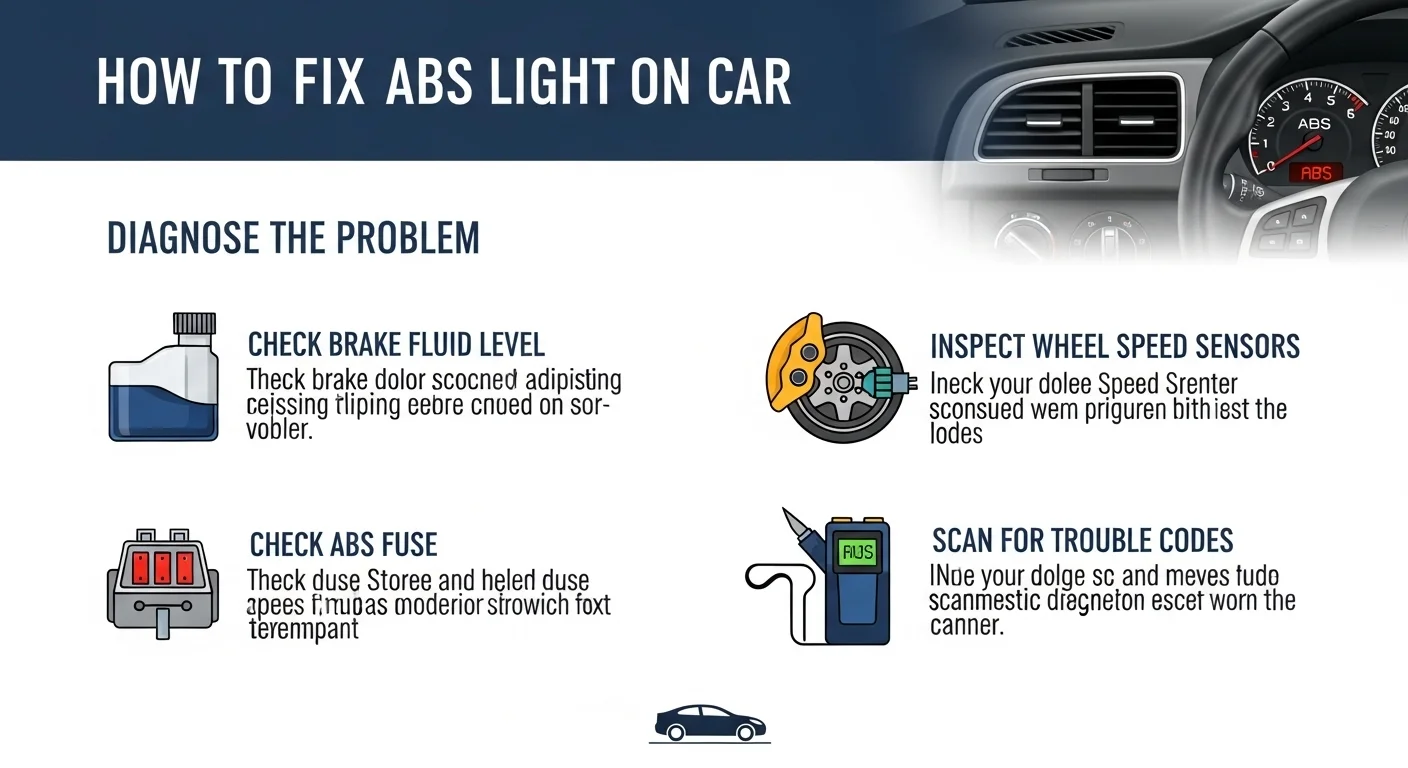
To fix the ABS light on a car, start by checking the ABS fuse and relay, as a blown fuse can trigger the warning light. Next, inspect the wheel speed sensors, which are located near each wheel. These sensors monitor wheel rotation and are one of the most common reasons the ABS light turns on. Dirt, debris, or a damaged sensor can cause the system to malfunction. Cleaning or replacing faulty sensors may solve the problem.
Another step is to check the ABS control module and the brake fluid level. Low brake fluid can sometimes activate the ABS warning light. If the issue persists, using an OBD-II scanner can help read the error codes stored in the car’s computer, making it easier to identify the exact problem. In some cases, professional diagnostics from a mechanic may be necessary to fully resolve the issue and restore the ABS system to normal operation.
ABS Car Meaning Light
The ABS car meaning light refers to the dashboard indicator that warns drivers about a problem with the Anti-lock Braking System. ABS is designed to maintain traction and control during sudden braking by preventing the wheels from locking up.
When the ABS warning light turns on, it means the system has detected an issue and has likely been disabled until the problem is fixed. While the regular braking system will still work, the anti-lock function may not operate correctly, which can increase the risk of skidding during hard braking or slippery road conditions.
Common reasons for the ABS light turning on include faulty wheel speed sensors, damaged wiring, low brake fluid, or problems with the ABS control module. It’s important to diagnose the issue promptly because the ABS system plays a major role in modern vehicle safety. Ignoring the warning light for too long may reduce your vehicle’s ability to handle emergency braking situations.
What Does ABS Mean on a Car How to Turn It Off
ABS on a car stands for Anti-lock Braking System, a safety technology that prevents your wheels from locking when you brake suddenly. By rapidly pulsing the brakes, the ABS system helps maintain steering control and reduces the chances of skidding, especially on wet or slippery roads.
Many drivers wonder how to turn off ABS in a car, but in most modern vehicles, ABS is designed to stay active at all times for safety reasons. There is usually no manual switch to disable it. The system automatically activates when it detects wheel lock-up during braking.
If the ABS warning light is on and you want to turn it off, the real solution is to fix the underlying problem rather than disabling the system. This may involve repairing a faulty sensor, replacing damaged wiring, or resetting the system using a diagnostic tool. Once the issue is fixed and the car’s computer resets, the ABS light will usually turn off automatically.
ABS Car Meaning Mercedes
In Mercedes vehicles, the ABS system works the same way as in most modern cars, but it is often integrated with advanced safety systems such as traction control and electronic stability programs. The ABS car meaning in Mercedes refers to the Anti-lock Braking System that helps maintain vehicle control during emergency braking situations.
When the ABS warning light appears on a Mercedes dashboard, it indicates a malfunction within the braking system’s electronic control unit or related components. Mercedes vehicles rely heavily on sensors and computerized systems, so a warning light may appear due to issues like wheel speed sensor failure, damaged wiring, or a faulty ABS module.
In some cases, the ABS warning light may also be connected to other systems such as ESP (Electronic Stability Program) or traction control. Because these systems work together, diagnosing the issue may require a specialized diagnostic scanner designed for Mercedes vehicles. Regular maintenance and prompt repairs help ensure the ABS system continues to operate effectively.
Is It Safe to Drive My Car with the ABS Light On
Driving with the ABS light on can be concerning, and many drivers wonder if it is safe to continue using their vehicle. In most cases, the basic braking system will still work normally even when the ABS warning light is illuminated.
However, the Anti-lock Braking System itself may be disabled, which means your car may not have the same level of control during sudden braking. Without ABS, the wheels can lock up when braking hard, increasing the risk of skidding, especially on wet, icy, or loose road surfaces.
If the ABS light comes on while driving, it’s usually safe to drive the car carefully to a repair shop, but it should not be ignored for long. It’s best to avoid aggressive braking and have the vehicle inspected as soon as possible. Addressing the problem quickly ensures that your braking system maintains its full safety capabilities.
What Is the Meaning of ABS Body
The meaning of ABS body can refer to two different contexts depending on how the term is used. In the automotive world, ABS typically stands for Anti-lock Braking System. However, when referring to an ABS body, it often means a body part or component made from Acrylonitrile Butadiene Styrene (ABS) plastic.
ABS plastic is a strong, lightweight, and durable material widely used in automotive manufacturing. Many car parts such as dashboards, trim panels, interior components, and protective covers are made from ABS plastic because it is resistant to impact and heat.
In some cases, the term “ABS body” may also appear in manufacturing or product design to describe items made entirely from ABS material. This plastic is commonly used not only in vehicles but also in electronics, appliances, and consumer products due to its durability and versatility.
How to Turn Off ABS in Car
The ABS system in a car is designed to operate automatically and cannot usually be turned off manually in most modern vehicles. Manufacturers build ABS as a permanent safety feature that activates when the system detects wheel lock-up during braking.
If someone wants to turn off ABS, it typically involves removing the ABS fuse or disconnecting the system. However, doing this is strongly discouraged because it reduces the vehicle’s safety and can lead to dangerous driving conditions, especially during emergency braking.
If the ABS light is on and you want it to turn off, the correct approach is to identify and fix the problem causing the warning light. This may involve replacing wheel speed sensors, repairing wiring, or resetting the ABS module with a diagnostic tool. Once the issue is resolved, the warning light will usually turn off automatically.
ABS Brake Meaning
The ABS brake meaning refers to the Anti-lock Braking System, a technology designed to improve vehicle safety by preventing the wheels from locking during sudden braking. This system allows drivers to maintain steering control even when braking hard.
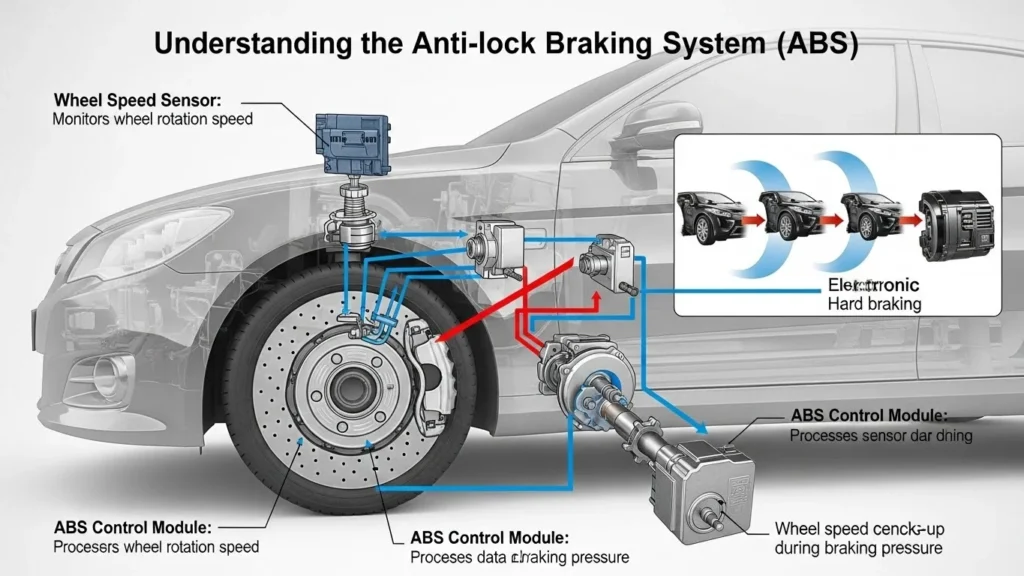
ABS brakes work by using sensors that monitor the speed of each wheel. If the system detects that a wheel is about to lock up, it rapidly pulses the brake pressure to that wheel. This process happens many times per second and helps maintain traction between the tires and the road.
The main benefits of ABS brakes include better vehicle control, reduced risk of skidding, and improved safety during emergency stops. Today, ABS is considered a standard safety feature in most modern vehicles and plays an important role in advanced systems such as traction control and electronic stability control.