

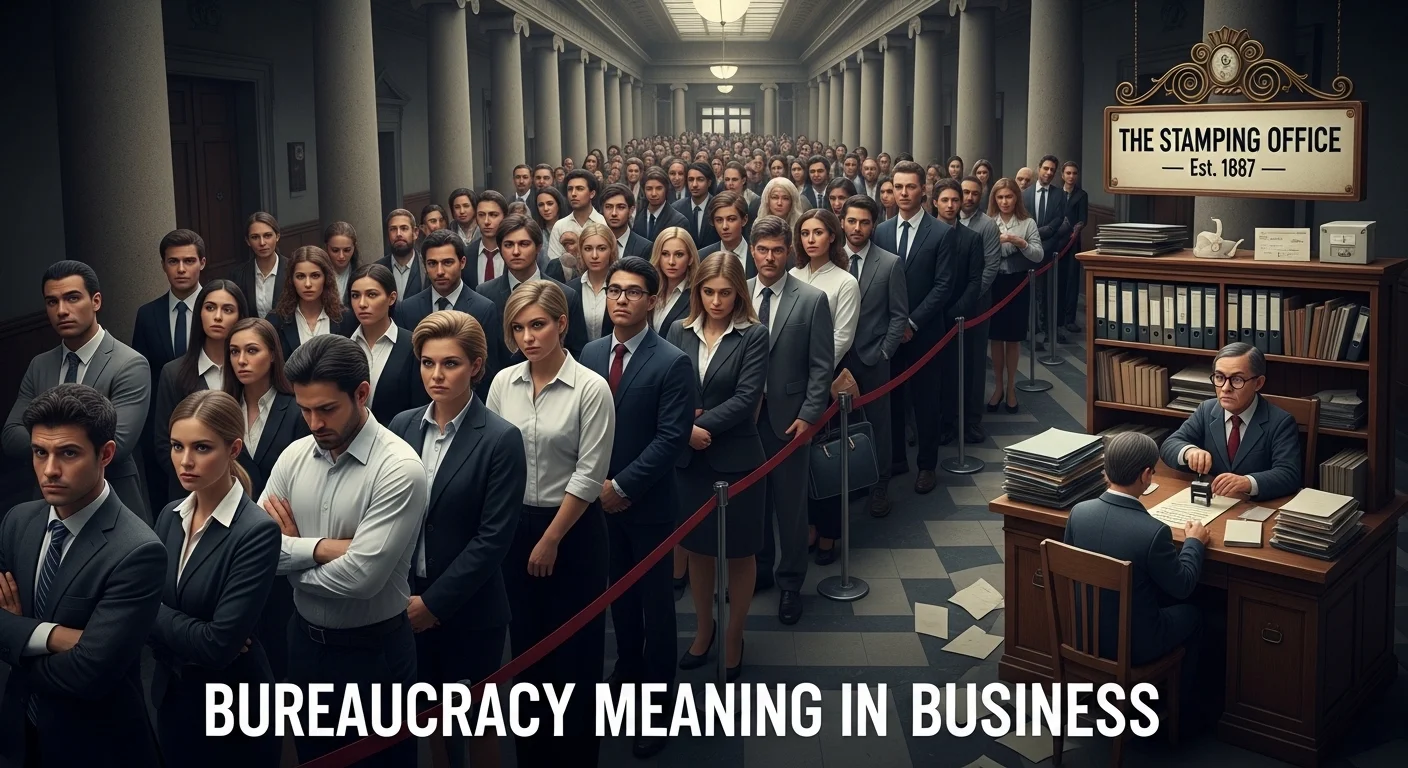
Bureaucracy Meaning in Business
In business, bureaucracy refers to a structured system where tasks are managed through clear rules, hierarchy, and procedures. Employees follow defined roles and responsibilities to ensure consistency and efficiency.
While this system helps maintain order and accountability, it can sometimes slow down decision-making due to multiple levels of approval. Still, it is useful in large organizations where control and organization are essential.
Bureaucracy Meaning in Management
In management, bureaucracy describes a formal approach to organizing work through strict policies and a clear chain of command. Managers rely on rules and procedures to guide employee actions.
This approach helps reduce confusion and ensures everyone understands their role. However, too much bureaucracy can limit creativity and flexibility in decision-making.
Bureaucracy Meaning in Sociology
In Sociology, bureaucracy is studied as a system of organization designed to manage large groups efficiently. It focuses on hierarchy, specialization, and rule-based operations.
Sociologists often analyze how bureaucracy affects social behavior, authority, and institutions. It is seen as both necessary for organization and potentially limiting for individual freedom.
Bureaucracy Examples
A common example of bureaucracy is a government office where forms, approvals, and procedures must be followed step by step. Each task goes through specific departments before completion.
Another example is a large corporation where decisions require approval from multiple managers. These examples show how bureaucracy structures processes but can also slow things down.
Bureaucracy Meaning in Law
In law, bureaucracy refers to administrative systems that handle legal processes through formal rules and procedures. Courts, government agencies, and regulatory bodies often operate within bureaucratic structures.
This ensures fairness and consistency in legal decisions. However, it can also make legal processes lengthy and complex.
Bureaucracy Meaning Synonyms
Common synonyms for bureaucracy include “administration,” “official system,” “red tape,” and “formal structure.” Each term highlights different aspects of rule-based organization.
Some synonyms like “red tape” carry a negative tone, suggesting excessive rules or delays. Others are more neutral and focus on structure and organization.
Bureaucracy Meaning in History
Historically, bureaucracy developed as societies grew larger and more complex. Governments needed structured systems to manage people, resources, and laws effectively.
Over time, bureaucratic systems became essential in empires, states, and modern governments. They helped maintain order and organize large populations.
Bureaucracy Meaning in Arabic
In Arabic, bureaucracy is commonly translated as “بيروقراطية” (bureaucratiyya). It refers to a system based on rules, procedures, and administrative control.
The term is used in government, business, and social contexts to describe structured management systems. It can have both neutral and negative meanings depending on how it is applied.
What Does “Bureaucracy” Mean?
Bureaucracy refers to a system of organization that relies on rules, procedures, hierarchy, and official roles to manage tasks and decisions.
In simple terms:
Bureaucracy is a structured way of running organizations using rules, paperwork, and authority levels.
Core Elements of Bureaucracy
A bureaucratic system usually includes:
Clearly defined roles and responsibilities
A chain of command (who reports to whom)
Written rules and policies
Standard procedures for decision-making
Documentation and record-keeping
Origin of the Word “Bureaucracy”
The word comes from:
French: bureau (desk or office)
Greek: kratos (power or rule)
So bureaucracy literally means “rule by offices or desks.”
Originally, it was meant to describe an efficient, organized system. Over time, it gained a negative tone because of delays, red tape, and lack of flexibility.
How People Use “Bureaucracy” in Real Conversations
Today, bureaucracy is often used critically, especially in casual speech, media, and online discussions.
Common Real-World Contexts
People mention bureaucracy when talking about:
Government offices and public services
Corporate workplaces
Universities and hospitals
Legal and immigration processes
Large organizations with many approvals
Casual Usage Examples
In everyday language, people often mean:
“Too many rules”
“Unnecessary paperwork”
“Slow decision-making”
“Complicated processes”
For example:
“It should’ve taken one day, but bureaucracy turned it into three weeks.”
“I quit because the company’s bureaucracy was unbearable.”
When It’s Accurate vs Misused
Accurate use:
Referring to structured systems with formal procedures
Misuse:
Blaming bureaucracy for personal delays or poor communication that aren’t actually rule-based
Understanding the difference helps you use the term correctly — especially in professional or academic settings.
Real-Life Examples of Bureaucracy in Action
To understand bureaucracy meaning clearly, it helps to see how it plays out in real life.
Example 1: Government Office
Situation: Applying for a passport
Bureaucracy at work:
Forms
Identity verification
Multiple approval steps
Why it exists: Security and accuracy
Why it feels frustrating: Time and repetition
Example 2: Corporate Workplace
Situation: Getting approval for a small budget
Bureaucracy at work:
Manager approval
Finance review
Compliance check
Benefit: Prevents misuse of funds
Downside: Slows innovation
Example 3: University Administration
Situation: Registering for a class
Bureaucracy at work:
Prerequisites
Department approval
Academic policies
Helpful: Maintains academic standards
Annoying: Limits flexibility
Why Bureaucracy Exists (It’s Not All Bad)
Despite its bad reputation, bureaucracy plays an important role in society.
Benefits of Bureaucracy
Consistency: Rules apply equally to everyone
Accountability: Clear responsibility prevents abuse
Efficiency at scale: Large systems need structure
Stability: Prevents chaos and arbitrary decisions
Without bureaucracy, governments and large organizations would struggle to function fairly.
When Bureaucracy Becomes a Problem
Bureaucracy turns negative when it becomes:
Too rigid
Resistant to change
Focused on rules over results
Detached from real human needs
This is when people start using the word as an insult.
Bureaucracy vs Red Tape: Are They the Same?
People often confuse these terms, but they’re not identical.
Bureaucracy
A system of organization
Can be helpful or harmful
Neutral in theory
Red Tape
Excessive bureaucracy
Unnecessary rules and delays
Almost always negative
Red tape is what happens when bureaucracy goes too far.
Common Mistakes & Misunderstandings
Many people misunderstand bureaucracy meaning or use it incorrectly.
Mistake 1: Thinking Bureaucracy Is Always Bad
Bureaucracy itself is neutral. The problem is how it’s implemented.
Mistake 2: Using It as a Catch-All Complaint
Not every delay or mistake is caused by bureaucracy. Sometimes it’s poor management or lack of resources.
Mistake 3: Confusing Bureaucracy with Government Only
Bureaucracy exists in:
Private companies
Schools
Nonprofits
Hospitals
It’s not limited to governments.
Mistake 4: Assuming No Rules Is Better
Organizations without structure often face:
Confusion
Favoritism
Legal issues
Some bureaucracy is necessary.
Bureaucracy in Modern Digital Life (2026 Perspective)
In 2026, bureaucracy hasn’t disappeared — it has gone digital.
Digital Bureaucracy Examples
Online forms replacing paper
Automated approval systems
AI-assisted compliance checks
Account verification processes
Has Technology Reduced Bureaucracy?
Yes and no.
Improved:
Faster processing
Fewer physical documents
Still frustrating:
Endless online steps
Auto-rejections without explanations
Hard-to-reach human support
Modern bureaucracy is often faster but less personal.
Related Terms & Concepts
Understanding related terms helps clarify bureaucracy meaning further.
Related Words
Administration: Managing operations
Hierarchy: Ranked authority structure
Regulation: Official rules
Compliance: Following policies
Institution: Established organization
Related Slang & Phrases
“Paper-pushing”
“System overload”
“Corporate maze”
“Approval hell”
These phrases often describe the experience of bureaucracy rather than the system itself.
