
Bandwagon Meaning in IR
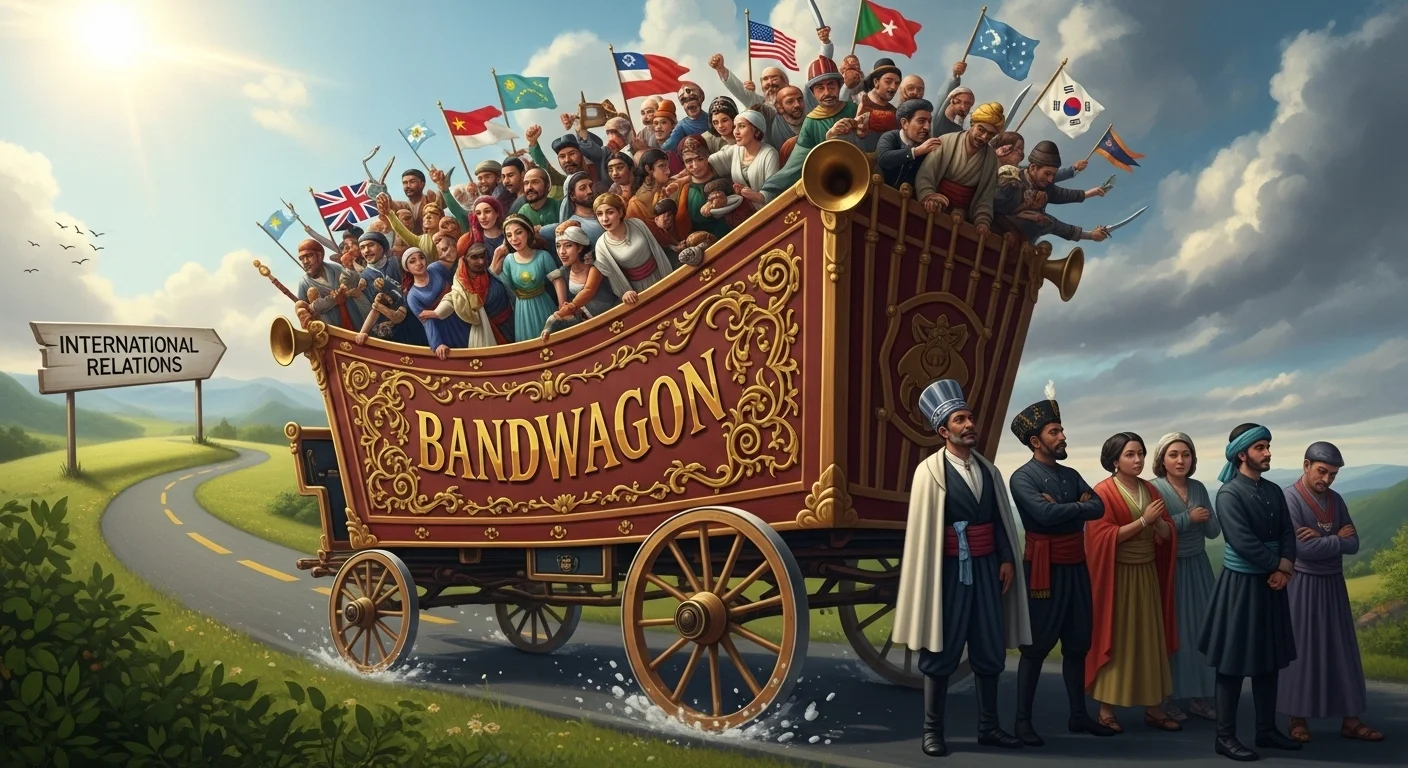
In international relations, bandwagon meaning refers to the strategy where a smaller or weaker country aligns itself with a stronger power, often to gain security or political advantage. Instead of challenging the dominant power, nations “jump on the bandwagon” to benefit from its influence, protection, or resources. This concept is crucial for understanding alliance formation, geopolitical strategy, and the dynamics of global politics.
Jumping on the Bandwagon Meaning
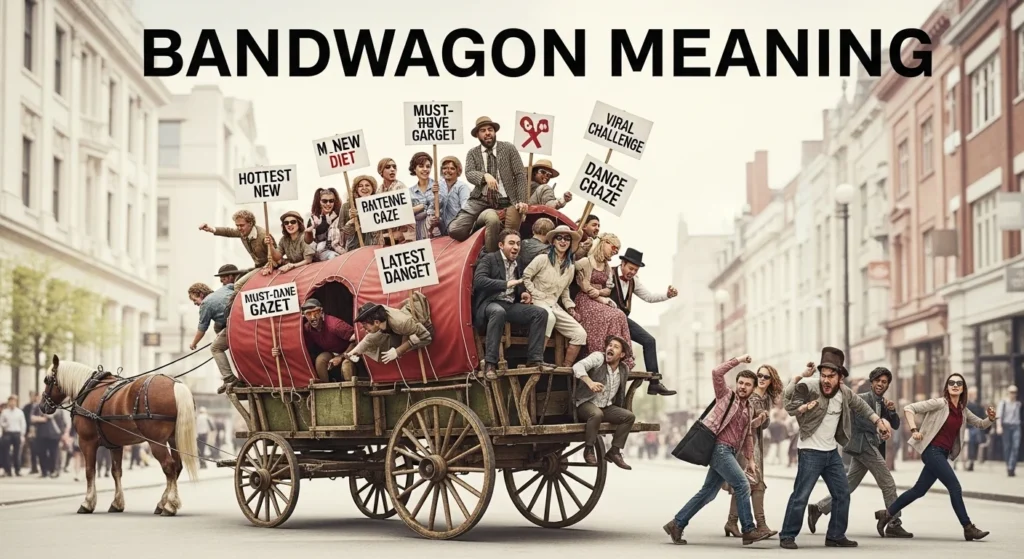
The phrase jumping on the bandwagon meaning describes the act of joining a popular trend, activity, or movement simply because others are doing it. It highlights how social influence and peer pressure can drive behavior, whether in fashion, politics, entertainment, or consumer trends. This concept explains why some trends gain rapid popularity.
Bandwagon Meaning Slang
In slang, bandwagon meaning often refers to someone who adopts a trend, opinion, or habit not out of genuine interest but because it is popular. For example, a sports fan who suddenly supports a winning team after a championship is considered a “bandwagon fan.”
Bandwagon Meaning Sports
In sports, bandwagon meaning is commonly used to describe fans who support a team only when it is winning or successful. These fans may not have a long-term allegiance but join in to enjoy the excitement and social recognition of supporting a winning team.
Bandwagon Meaning Fallacy
The bandwagon meaning fallacy is a logical error where something is deemed true or correct simply because many people believe or follow it. It is also called the appeal to popularity and is often used in arguments, advertising, or political persuasion, but it does not guarantee the validity of a claim.
Bandwagon Meaning in Economics
In economics, bandwagon meaning refers to consumer behavior influenced by the popularity of a product or service. When people buy something because everyone else is buying it, businesses may see a surge in demand that is driven by social influence rather than intrinsic value or quality.
Bandwagon Meaning in Advertising
In advertising, bandwagon meaning is a strategy where marketers encourage consumers to “join the crowd” by promoting a product’s popularity. Phrases like “Everyone is using this!” or “Join millions of satisfied customers!” leverage the bandwagon effect to boost sales.
Bandwagon Meaning Synonyms
Common bandwagon meaning synonyms include trend follower, follower, joiner, copycat, and conformist. Each term captures the essence of adopting something primarily because others are doing it, rather than out of personal conviction.
What Does “Bandwagon” Mean in Chat or Text?
Bandwagon meaning in chat usually refers to someone joining a trend, opinion, or activity because it’s popular—not necessarily because they genuinely like it. It’s often used playfully but can carry a teasing or critical tone.
Literal origin: The term comes from 19th-century politics in the U.S., where candidates would literally ride a bandwagon to parade their popularity.
Modern chat usage: Today, it describes jumping on a trend or copying others online.
Context matters: Depending on tone, calling someone a “bandwagoner” can be light teasing or slightly negative.
Example:
“Everyone’s switching to that new game? Don’t just hop on the bandwagon!”
How People Use “Bandwagon” in Real Conversations
Platforms:
Texting with friends
Instagram or Twitter comments
Snapchat streak chats
Discord servers and gaming communities
TikTok trends and memes
When it’s appropriate:
Teasing friends who follow trends blindly
Warning someone about hype
Discussing pop culture, sports, or viral challenges
When it’s awkward:
Calling someone a bandwagoner in professional or sensitive contexts
Overusing the term in casual chats
Tips:
Keep it casual
Match the tone of your conversation
Use it sparingly to sound relatable, not judgmental
Real-Life Examples of “Bandwagon” in Text Messages
Here are some chat-style examples to illustrate bandwagon meaning in text:
Friend 1: “I just started watching that show.”
Friend 2: “Finally! You’re jumping on the bandwagon, huh?”Explanation: Playful teasing about joining a popular trend late.
Player 1: “Everyone’s playing this new game.”
Player 2: “I don’t wanna just hop on the bandwagon.”Explanation: Shows hesitation to follow a popular trend blindly.
Follower 1: “I’ve started liking that new meme format.”
Follower 2: “Bandwagon alert!”Explanation: Fun, casual warning about joining a viral trend.
Common Mistakes & Misunderstandings
Even common slang can be tricky. Here are pitfalls when using bandwagon:
Confusing with American Sign Language: Don’t mix it up with “band” or “wagon” hand signs—they’re unrelated.
Using in the wrong context: Avoid using “bandwagon” to criticize someone seriously—it’s mostly casual slang.
Tone misinterpretations: It can sound judgmental if not used playfully.
Related Slangs & Abbreviations
Here are other chat terms similar in vibe to bandwagon:
FOMO (Fear of Missing Out): Often drives people to hop on trends.
Trendhopper: Someone who frequently follows viral trends.
Hypebeast: Popular in fashion/gaming, similar to bandwagoner.
Casual slang opportunities: You can link these internally in your site to guide readers to related definitions.