
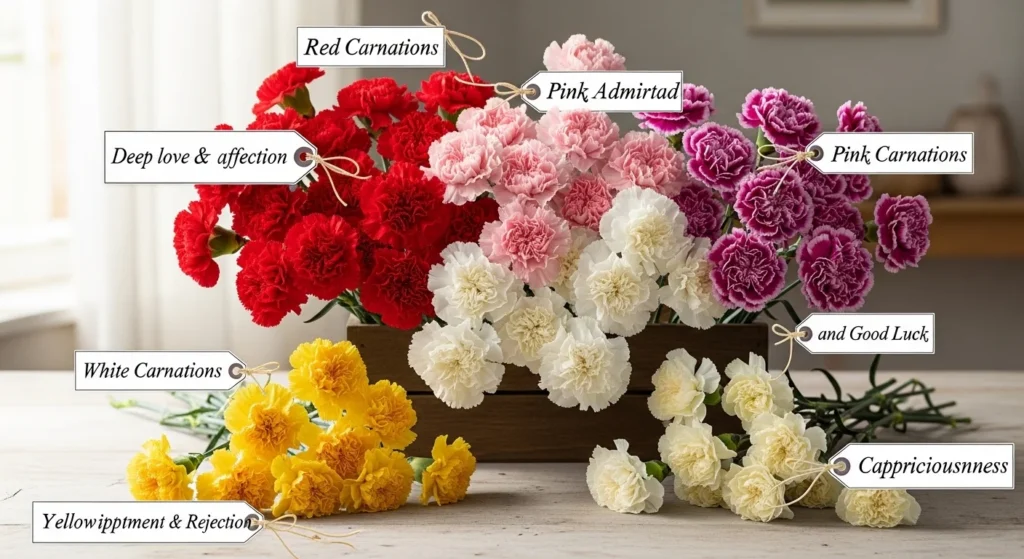
Carnations meaning has fascinated flower lovers for centuries, offering a secret language of emotions through delicate petals. From expressing love and admiration to sending sympathy, understanding these blooms can turn any bouquet into a meaningful gift. Whether you’re picking flowers for a loved one, decorating for a special occasion, or just curious about floral symbolism, carnations have a unique story to tell.
While carnations bring beauty and joy, it’s easy to make mistakes if you don’t know their meanings. Choosing the wrong color or misinterpreting symbolism can unintentionally send the wrong message. In this guide, we’ll explore the rich history, color meanings, and common pitfalls of carnations, so you can confidently share their charm in any setting.
What Does “Carnations Meaning” Represent?
Carnations meaning varies depending on context, culture, and color. At their core, carnations symbolize love, fascination, and distinction, making them a versatile choice for personal and formal occasions.
Historical background: Carnations are believed to have originated in the Mediterranean region over 2,000 years ago. They have been cultivated in gardens across Europe and Asia for centuries, often appearing in art, literature, and royal ceremonies.
General symbolism: Carnations often convey emotions such as admiration, love, and gratitude. They’re one of the few flowers whose meanings can change dramatically depending on their color.
Modern context: Today, carnations are widely used in bouquets, corsages, and decorations for weddings, Mother’s Day, and memorial services.
How People Use Carnations in Real Life
Carnations aren’t just pretty—they’re practical for communicating subtle messages. Here’s how they’re commonly used:
Occasions: Weddings, anniversaries, Mother’s Day, funerals, and graduations.
Social gifting: Sending carnations in a bouquet can convey admiration or sympathy without using words.
Home décor: Their long-lasting blooms and variety of colors make them popular in floral arrangements and DIY decorations.
Cultural significance: In some countries, carnations are used in festivals and traditional ceremonies. For example, red carnations often symbolize love in Western cultures, while white can indicate remembrance.
When Carnations Are Appropriate vs. Awkward
Appropriate: Expressing admiration, congratulating someone, celebrating milestones, or sending condolences.
Awkward: Giving carnations as a romantic gesture without knowing color symbolism; for example, giving white carnations to someone expecting red may send mixed messages.
Real-Life Examples of Carnations in Action
Here are some scenarios where carnations carry clear messages:
Red carnations for love:
Text: “Sent you some red carnations—thought of you today.”
Meaning: Romantic admiration or deep love.Pink carnations for gratitude:
Text: “A little pink bouquet for all you do—thanks!”
Meaning: Appreciation and thankfulness.White carnations for sympathy:
Text: “White carnations on their memorial, thinking of you.”
Meaning: Remembrance and respect.Mixed colors for celebration:
Text: “Happy Graduation! Here’s a colorful bouquet!”
Meaning: Joy, congratulations, and well wishes.Carnations in DIY décor:
Example: Adding carnations to a centerpiece for a wedding dinner table conveys elegance and thoughtfulness without needing words.
Common Mistakes & Misunderstandings
Even flower enthusiasts sometimes get carnations wrong. Here are common pitfalls:
Color mix-ups: Red for love, white for remembrance, pink for gratitude—but meanings can differ in other cultures.
Overthinking symbolism: Not every bouquet needs to carry a hidden message; sometimes, people just enjoy the beauty.
Confusing carnations with other flowers: Some flowers like roses or peonies may be assumed to share the same meanings—double-check before gifting.
Related Flower Symbolism & Abbreviations
Roses meaning: Love, passion, or friendship depending on color.
Lilies meaning: Purity, rebirth, and elegance.
Tulips meaning: Perfect love and cheerfulness.
Daisies meaning: Innocence and new beginnings.
FAQs About Carnations Meaning
1. What does a red carnation symbolize?
Red carnations symbolize love, admiration, and deep affection, making them perfect for romantic gestures.
2. Are pink carnations for mothers only?
Pink carnations are often associated with gratitude and appreciation, making them a popular choice for Mother’s Day, but they’re suitable for anyone you want to thank.
3. Can white carnations mean both sympathy and love?
Yes. White carnations typically represent remembrance and purity but can also symbolize unconditional love in certain contexts.
4. How long do carnations last in a bouquet?
Carnations are hardy flowers that can last 7–14 days with proper care, making them ideal for long-lasting arrangements.
5. Do carnations have different meanings in different countries?
Absolutely. While red is generally love and white is remembrance in Western cultures, meanings can vary in other regions, so always consider cultural context.
Conclusion
Understanding carnations meaning gives you the power to send subtle, thoughtful messages through flowers. Whether you’re gifting, decorating, or simply curious, knowing the symbolism behind each color ensures your gestures are meaningful and intentional. Carnations are timeless blooms that speak louder than words when you choose them thoughtfully.
What’s your favorite flower meaning? Drop it in the comments!