
Why Are Charter Schools Bad
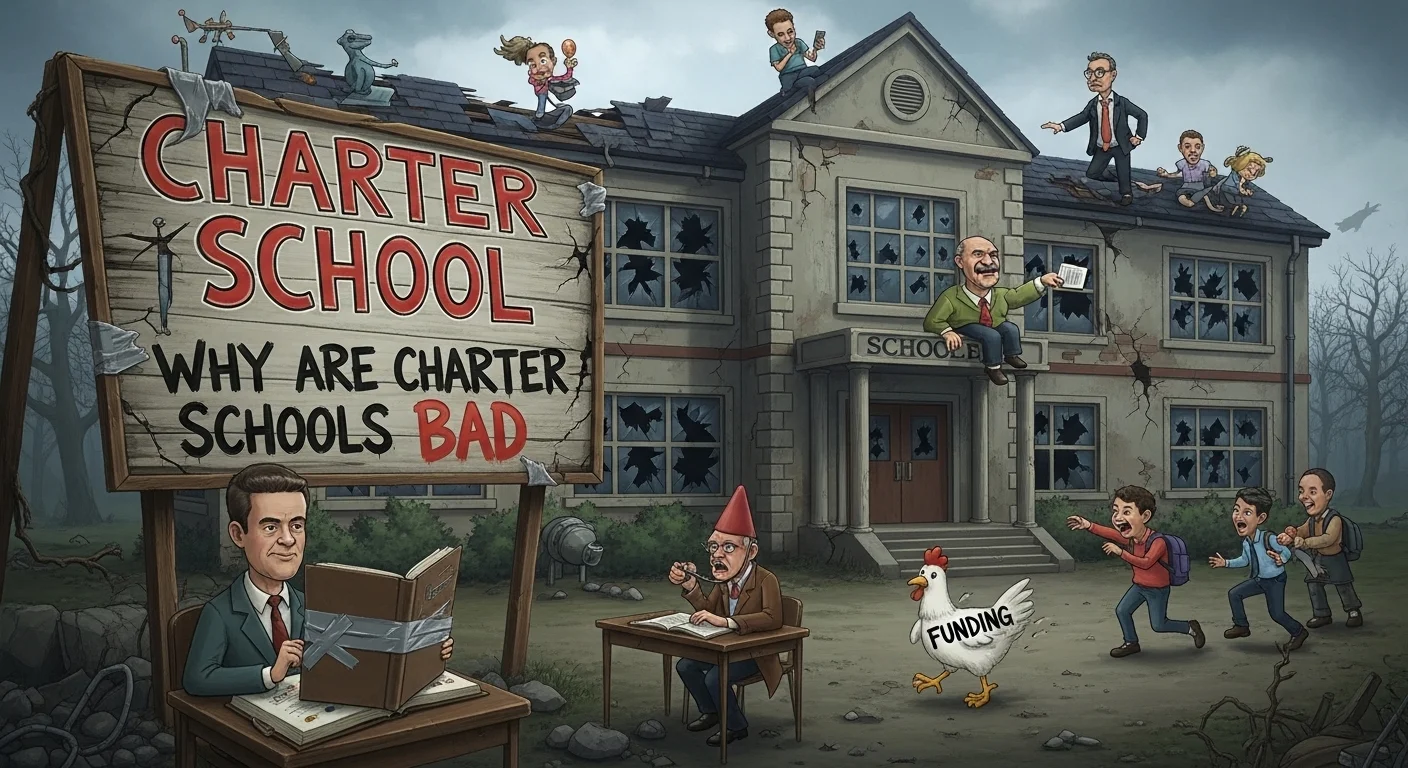
Charter schools are often criticized for several reasons, although opinions can vary widely. One common concern is that they may lack consistent oversight compared to traditional public schools, which can lead to uneven quality in education. Some charter schools perform very well, while others struggle with resources, staffing, or academic outcomes.
Another issue is funding. Since charter schools receive public money, critics argue that they can divert funds away from traditional public schools, potentially affecting the quality of education for a larger group of students. There are also concerns about transparency and accountability, as not all charter schools follow the same rules as public institutions. While they offer choice, the debate continues around whether they always serve students equally and effectively.
Charter School vs Public School
The difference between charter schools and public schools mainly lies in how they are managed and operated. Public schools are run by local or state governments and must follow strict regulations, standardized curriculums, and district policies.
Charter schools, on the other hand, are publicly funded but operate independently under a charter or agreement. This gives them more flexibility in teaching methods, curriculum design, and school policies. While public schools provide a consistent and regulated system, charter schools offer innovation and choice, making the decision depend on a student’s needs and learning style.
Charter School vs Private School
Charter schools and private schools differ primarily in funding and accessibility. Charter schools are funded by the government and are free to attend, making them accessible to a wider range of students.
Private schools rely on tuition fees and private funding, which can make them more exclusive. They also have complete control over their curriculum, admission process, and policies. While charter schools aim to combine public funding with flexibility, private schools offer independence but often at a higher cost. Each option serves different priorities, whether it’s affordability, structure, or specialized education.
Charter School Near Me
When searching for a charter school near you, the goal is usually to find a school that fits your academic expectations and location. Charter schools are often chosen for their unique programs, smaller class sizes, or specialized teaching approaches.
To find one nearby, you can check local education directories, school district websites, or online maps. It’s important to review each school’s performance, curriculum, and admission process before making a decision. Visiting the school or reading parent reviews can also help you understand if it’s the right fit for your needs.
Public Charter School Meaning
A public charter school is a type of school that is funded by the government but operates independently from the traditional public school system. It functions under a charter, which is essentially a contract that outlines its goals, curriculum, and performance expectations.
These schools are still accountable for student outcomes but have more freedom in how they teach and manage their operations. This balance between public funding and operational flexibility allows them to experiment with new teaching styles while remaining accessible to students without tuition fees.
What Is a Charter
A charter is a formal agreement or contract that gives an organization the authority to operate under specific rules and guidelines. In the context of education, a charter outlines how a charter school will function, including its mission, teaching methods, and performance goals.
This agreement is usually approved by a governing body, such as a school district or educational board. It acts as both a guide and a form of accountability, ensuring the school meets certain standards while allowing it the freedom to innovate.
What Is the Point of a Charter School
The main purpose of a charter school is to provide an alternative to traditional public education by offering more flexibility and innovation. These schools are designed to experiment with new teaching methods, curriculums, and approaches that may better meet the needs of certain students.
They also give parents and students more choice in selecting a school that aligns with their learning preferences. By combining public funding with independence, charter schools aim to improve educational outcomes and introduce fresh ideas into the education system.
Can Anyone Go to a Charter School
In most cases, charter schools are open to all students, as they are publicly funded and do not charge tuition. However, admission can sometimes depend on availability, as many charter schools have limited seats.
If more students apply than there are spots available, schools often use a lottery system to ensure fairness. While they are generally accessible, it’s important to check specific admission rules, as some schools may have particular requirements or focus areas. Overall, charter schools aim to provide equal opportunity while managing demand effectively.
What Does “Charter School” Mean?
A charter school is a public school that operates independently from the traditional school district system. Unlike regular public schools, charter schools are run under a “charter,” which is essentially a contract or agreement outlining how the school will operate, what standards it must meet, and how it will measure success.
Key Points:
Publicly funded: Charter schools receive government money but usually have more flexibility in how they use it.
Independent management: They can be run by nonprofit organizations, private companies, or even groups of teachers and parents.
Accountability: They must meet the goals set in their charter, and failure to meet them can result in closure.
Origin: Charter schools first appeared in the U.S. in the early 1990s. The idea was to give educators the freedom to innovate while still holding them accountable for student results.
Different Meanings Based on Context:
In general conversation, “charter school” usually refers to the type of school itself.
In policy discussions, it can also reflect debates about funding, public vs private education, and educational outcomes.
How People Use “Charter School” in Real Conversations
People talk about charter schools in several contexts—often when discussing school choice, education quality, or extracurricular programs. Here’s how the term comes up:
Texting/Chats:
“Thinking about sending my kid to a charter school next year. Heard they have great STEM programs.”
Social Media:
Parents might post: “Our charter school just launched a new robotics club! #SchoolChoice”
Forums & Discussion Boards:
“Does anyone know how charter schools differ from magnet schools in terms of curriculum?”
Dating/Small Talk:
Occasionally comes up when talking about education or family: “I teach at a charter school downtown.”
Tips for Using the Term:
Appropriate in educational or parenting discussions.
Awkward in casual chats unrelated to schools—don’t drop it randomly in a gaming group.
Use it when you’re comparing schools, talking about programs, or discussing school policies.
Real-Life Examples of “Charter School” in Conversations
Seeing examples helps make the concept stick. Here are a few real-life-style scenarios:
Example 1:
Text: “My daughter got accepted into the charter school near our neighborhood!”
Meaning: She will attend a public school with independent management and possibly a specialized program.
Example 2:
Instagram Post: “Charter schools give teachers more freedom to try new teaching methods. Loving it!”
Meaning: Highlights the flexibility that charter schools often have compared to traditional public schools.
Example 3:
Forum: “Do charter schools have the same sports programs as regular public schools?”
Meaning: Shows how people seek specific information about offerings or differences between school types.
Example 4:
Casual Chat: “Our local charter school focuses on arts and tech—perfect for my son.”
Meaning: Emphasizes a specialized curriculum, one of the hallmarks of many charter schools.
Common Mistakes & Misunderstandings
Charter schools are often misunderstood. Here’s what people get wrong:
Not Private Schools: Some think charter schools are private—they’re not. They are publicly funded and free to attend.
All Charter Schools Are Not the Same: Each charter school has its own charter, rules, and teaching approach. Don’t assume every charter school is identical.
Confusing Charter with Magnet or Private: Magnet schools are also public but focus on specialized subjects. Private schools are funded by tuition and independent of public funding.
Thinking They’re Easier: Flexibility doesn’t mean less rigorous—many charter schools have strict performance standards.
Related Slangs & Abbreviations in Education Conversations
When chatting about schools online, you might see related terms:
STEM: Science, Technology, Engineering, Math (frequently mentioned in charter school discussions).
Magnet School: Public schools with specialized curricula—different from charter schools.
School Choice: The general concept of choosing between public, charter, or private schools.
AP/IB: Advanced Placement or International Baccalaureate programs, often offered at charter schools.
These terms help you navigate discussions in forums, parenting groups, or social media.
