
Climate meaning in geography
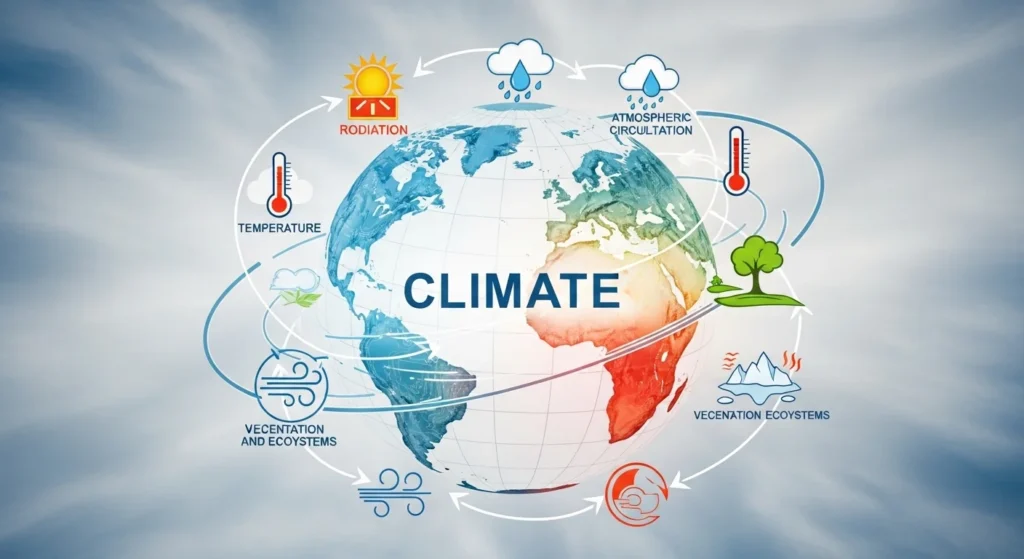
Climate meaning in geography refers to the long-term pattern of weather conditions in a specific region over many years. It includes average temperature, rainfall, humidity, wind patterns, and seasonal changes. Unlike daily weather, which can change quickly, climate describes what a place is usually like over a long period of time.
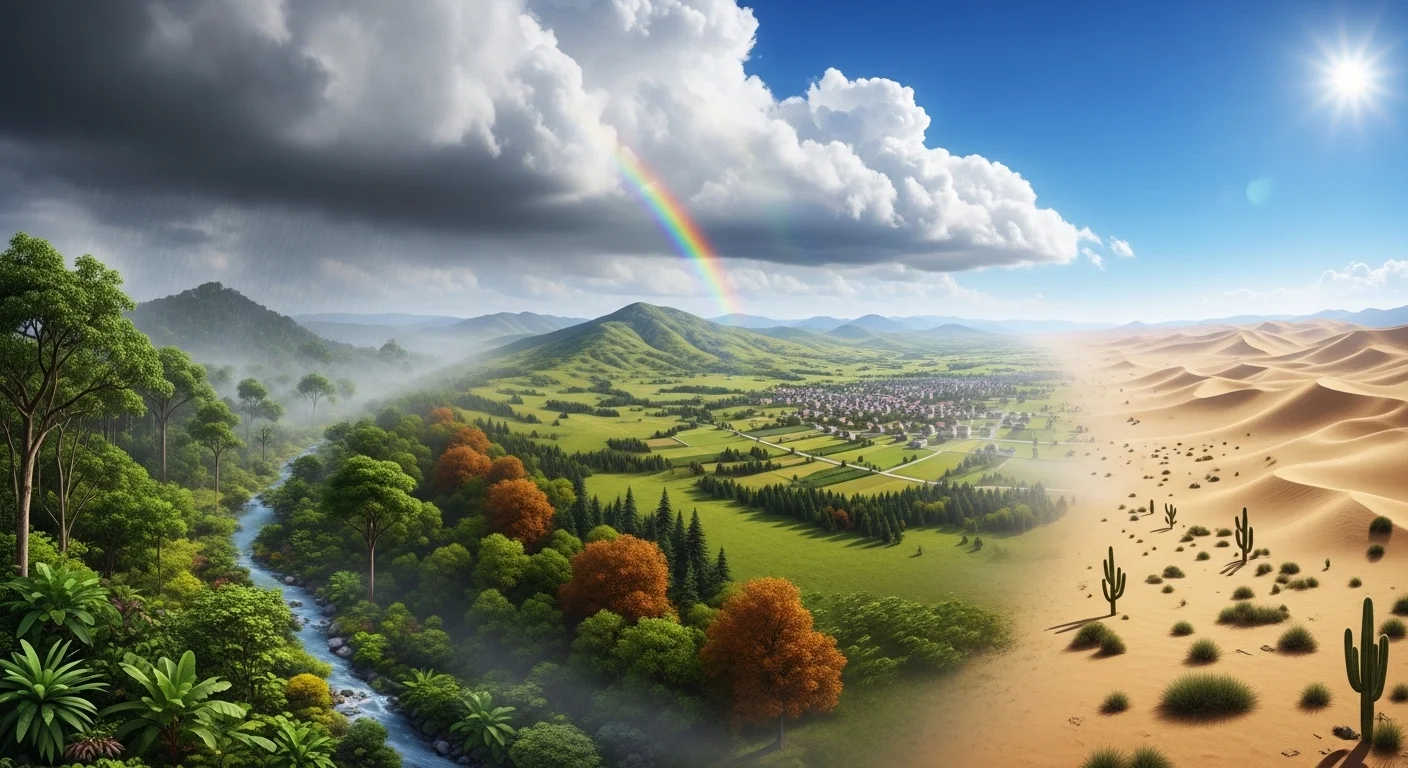
In geography, climate helps explain why deserts are hot and dry while tropical regions are warm and wet. It is shaped by factors like latitude, altitude, distance from the sea, and ocean currents. For example, places near the equator generally have a hot and humid climate, while polar regions remain cold throughout the year.
Understanding climate in geography is important because it influences agriculture, lifestyle, clothing, and even the types of animals and plants found in a region. It gives a complete picture of how environments are formed and how humans adapt to them.
Climate meaning in English
Climate meaning in English is the usual weather conditions of a place measured over a long time. It describes the average state of temperature, rainfall, and other atmospheric conditions that a region experiences year after year.
In simple words, climate tells us what kind of weather a place is known for. For example, the United Kingdom has a cool and rainy climate, while Saudi Arabia has a hot and dry climate. This meaning is often used in everyday conversation, education, and environmental studies.
Understanding climate in English helps learners clearly differentiate it from short-term weather changes. It provides a foundation for discussing global warming, environmental changes, and regional weather patterns in a simple and meaningful way.
Climate meaning slang
Climate meaning slang is not very common in formal language, but in casual online conversations, “climate” is sometimes used to describe the general “mood” or “atmosphere” of a situation. For example, people might say “the social climate” or “work climate” to describe how things feel in a group or environment.
In slang or informal use, it can refer to the emotional or social environment rather than weather or geography. For instance, a “toxic climate” might describe a negative workplace atmosphere, while a “positive climate” suggests a friendly and supportive environment.
This modern usage shows how language evolves, allowing “climate” to go beyond weather and geography into describing feelings, attitudes, and surroundings in everyday life.
Short definition of climate
A short definition of climate is the average weather conditions of a place over a long period of time. It includes temperature, rainfall, humidity, and seasonal patterns.
In simple terms, climate tells us what the weather is usually like in a region, not just for a day or week. For example, if a place is mostly warm and rainy throughout the year, that is its climate.
This short definition is commonly used in exams and basic geography lessons because it clearly explains the concept in an easy and memorable way.
Define climate Class 9
Define climate Class 9 typically refers to a textbook-level explanation suitable for school students. Climate is defined as the long-term average of weather conditions in a specific area, usually measured over 30 years or more.
In Class 9 geography, students learn that climate includes elements like temperature, rainfall, wind, and humidity. It also explains how climate differs from weather and how different factors like latitude, altitude, and distance from the sea affect it.
For example, India has a monsoon climate, meaning it experiences seasonal rainfall during specific months. This definition helps students build a strong foundation in physical geography and understand environmental patterns.
Climate examples
Climate examples help us understand how different regions experience different weather patterns over time. For instance, tropical climates are found in places like Brazil and Indonesia, where it is hot and humid most of the year.
Desert climates, such as in the Sahara Desert, are extremely hot and dry with very little rainfall. On the other hand, polar climates like Antarctica remain cold throughout the year with snow and ice dominating the landscape.
These examples show how climate shapes ecosystems, human lifestyles, and even architecture. Studying them makes it easier to understand how diverse our planet really is.
Climate meaning and examples
Climate meaning and examples together help explain the concept more clearly. Climate is the long-term pattern of weather in a region, while examples show how it appears in real life across different parts of the world.
For example, a tropical climate is warm and rainy, found in countries near the equator. A temperate climate has moderate temperatures and is seen in places like Europe. A desert climate is hot and dry, while a polar climate is extremely cold.
By combining meaning and examples, it becomes easier to understand how climate affects daily life, agriculture, and natural environments across the globe.
Climate meaning vs weather
Climate meaning vs weather is an important comparison in geography. Climate refers to long-term weather patterns in a region, while weather describes short-term atmospheric conditions at a specific time and place.
For example, if it rains today, that is weather. But if a region receives heavy rainfall every monsoon season for many years, that is its climate. Weather can change within minutes or hours, but climate takes decades to observe.
Understanding this difference helps avoid confusion and builds a clearer picture of how Earth’s atmosphere behaves over both short and long periods.
What Does “Climate” Mean in Chat or Text?
At its core, the climate meaning is about the general conditions or atmosphere of a place, situation, or environment.
1. Scientific Context
In geography and science, climate refers to long-term patterns of temperature, precipitation, humidity, and wind in a specific region.
Example: “The desert has a dry climate, while the rainforest has a humid climate.”
2. Social or Workplace Context
In everyday language, climate can describe the “feel” of a place or group.
Example: “The office climate is very collaborative,” meaning the atmosphere encourages teamwork.
3. Online & Chat Context
People sometimes use “climate” in texting or forums to talk about moods, trends, or social atmospheres.
Example: “The political climate online is really intense right now.”
Origin/History:
The word “climate” comes from the Greek klima, meaning “region” or “slope,” originally describing the tilt of the Earth affecting weather patterns. Over time, its use expanded to describe environments, social moods, and trends.
How People Use “Climate” in Real Conversations
Platforms where you’ll see “climate”:
Texting between friends: casual observations about places or moods
Instagram & Twitter: commenting on social vibes or trends
Discord & forums: discussions about social, political, or gaming atmospheres
Workplace chats: describing team dynamics or organizational culture
Appropriate Use
Talking about weather: “The climate here is perfect for hiking.”
Describing workplace mood: “The company climate is positive and inclusive.”
Discussing social trends: “The climate around this debate online is toxic.”
When It Feels Awkward
Overusing in casual chats with friends without context: “The climate is cool” might confuse if it’s not weather-related.
Using in slang-heavy spaces where simpler words like “vibe” might fit better.
Tip: Use “climate” when you want a slightly formal or precise tone. For casual texting, “vibe” or “mood” often works better.
Real-Life Examples of “Climate” in Text Messages
Weather Chat:
Friend 1: “How’s the climate in your city?”
Friend 2: “Pretty chilly, snow’s coming this weekend.”Workplace Chat:
Colleague 1: “I’m worried about the climate in the meeting tomorrow.”
Colleague 2: “Don’t stress, it’s actually relaxed.”Online Discussion:
User 1: “The climate around this new game is insane.”
User 2: “Yeah, everyone’s debating the new features nonstop.”Social Media Observation:
“The political climate online is wild lately.”Casual Vibe Chat:
“I love the chill climate of this café, perfect for working.”
Explanation:
In each example, “climate” adapts to the context — weather, social vibe, online trends, or workplace atmosphere.
Common Mistakes & Misunderstandings
Confusing “climate” with short-term weather – Climate is about long-term patterns, while weather describes daily conditions.
Misusing in slang-heavy chats – Using “climate” instead of “vibe” or “mood” in casual texting can sound stiff.
Overcomplicating sentences – “The climate of this event is very collaborative” might be simpler as “The event vibe is collaborative.”
Ignoring context – “Climate” in an online debate might seem literal if readers expect slang.
Related Slangs & Abbreviations
Vibe – Casual term for mood or atmosphere
Mood – Another word for feeling or emotional climate
Energy – Informal term often describing group dynamics
Atmos – Shortened slang for atmosphere
