
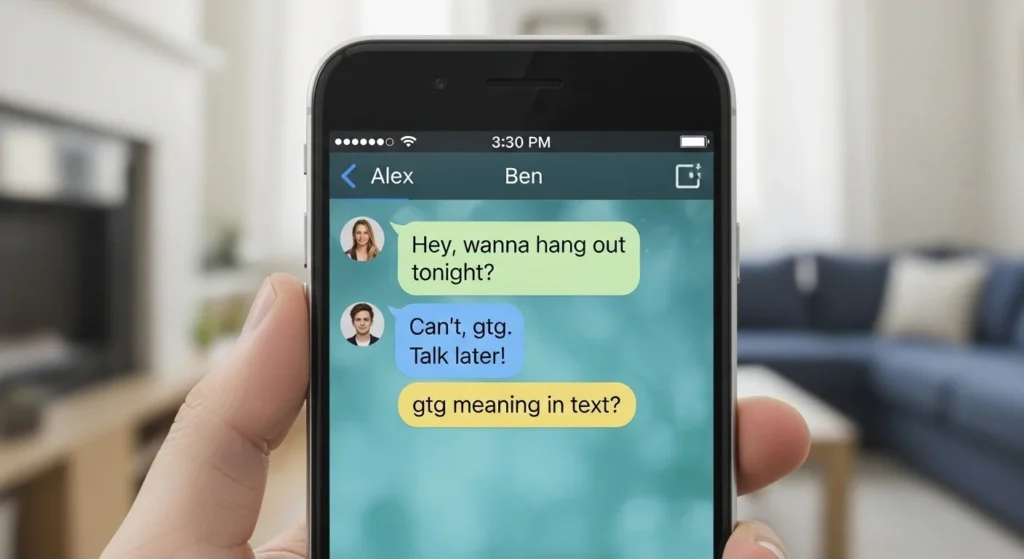
GTG meaning in text is one of those tiny abbreviations that can make chatting faster and more fun—but it can also cause awkward misunderstandings if used the wrong way. Whether you’re texting a friend, sliding into a DM, or coordinating in a gaming session, knowing what GTG really means helps you stay in the loop and avoid accidentally sounding rude or abrupt.
Even though GTG is simple, it carries a lot of weight in digital conversations. Some people love how efficiently it signals a quick exit, while others get frustrated when it’s overused or misinterpreted. In this guide, we’ll break down GTG meaning in text, show real-life examples, and give tips for using it naturally, so you can chat confidently every time.
What Does “GTG” Mean in Chat or Text?
GTG is an abbreviation commonly used in texting and online chats that stands for “Got To Go.”
At its core, it signals that the person is leaving a conversation, either temporarily or permanently. The meaning is simple, but context can shift the tone:
Casual exit: “GTG, dinner’s ready.”
Urgent departure: “GTG, the meeting just started.”
Playful or sarcastic: “GTG… but this game is too addictive!”
A Brief History of GTG in Online Chats
GTG became popular in the early 2000s with instant messaging platforms like AOL Instant Messenger (AIM), MSN Messenger, and early chat rooms. It was part of the first wave of text shorthand, designed to save time and keystrokes in real-time conversations.
Since then, it has carried over into texting, Discord, Snapchat, Instagram DMs, and even multiplayer gaming chats. Despite its age, GTG remains widely recognized among Gen Z, millennials, and even older digital natives.
How People Use “GTG” in Real Conversations
GTG is versatile and can appear on almost any platform where instant messaging occurs. Here’s a breakdown:
Platforms Where GTG Is Common
Texting/SMS: Quick exit notice in casual chats.
Instagram/Snapchat DMs: Signals you need to leave but want to close the chat politely.
Discord & Gaming Platforms: Common mid-game when someone has to log off.
Dating Apps: Used to politely end a conversation without ghosting.
Forums & Group Chats: Quick way to signal departure from a discussion.
When It’s Appropriate vs. Awkward
Appropriate Uses:
When you really need to leave a chat temporarily.
To politely exit without creating confusion.
In casual group or one-on-one conversations.
Awkward Uses:
Using GTG repeatedly without explanation can feel abrupt.
Deploying it in professional or formal chat settings (Slack, email threads) may seem dismissive.
Overusing it with friends who prefer complete sentences can come across as lazy.
Tip: Pair GTG with a brief explanation or emoji-free sentence if you want to sound polite:
“GTG, dinner’s ready. Catch you later!”
Real-Life Examples of “GTG” in Text Messages
Seeing GTG in action makes it easier to understand its tone. Here are some common scenarios:
Quick Dinner Exit:
Friend: “Wanna keep chatting?”
You: “GTG, dinner’s ready!”
Polite and clear: You’re leaving but will return later.
Gaming Mid-Session:
Gamer1: “Ready for the next round?”
Gamer2: “GTG, my mom needs me.”
Signals a temporary log-off.
Urgent Situation:
Friend: “Hey, you there?”
You: “GTG, fire alarm at my place!”
Communicates urgency while exiting the conversation.
Casual Chat End:
Friend: “We should keep texting!”
You: “GTG… this show’s starting.”
Friendly and playful.
Polite Group Chat Exit:
Group Chat: “Who’s bringing snacks?”
You: “GTG, but someone grab some chips for me!”
Leaves conversation on a friendly note.
Notice: The tone of GTG often depends on punctuation, context, and accompanying explanation.
Common Mistakes & Misunderstandings
Even though GTG is simple, people can misuse or misinterpret it.
Confusing GTG with ASL: Some beginners mistake chat abbreviations like GTG for American Sign Language shorthand. Remember, GTG is texting slang, not ASL.
Wrong context: Using GTG in professional emails or formal chats may seem abrupt or rude.
Tone misinterpretation: Without context, GTG can appear cold or dismissive. Adding a short reason for leaving helps avoid confusion.
Quick Tip: To avoid miscommunication, you can combine GTG with a reason or friendly closing:
“GTG, talk to you soon!”
“GTG, my ride’s here!”
Related Slangs & Abbreviations
If you’re learning GTG, these abbreviations often appear alongside it:
BRB – Be Right Back (temporary exit)
TTYL – Talk To You Later (leaves conversation but signals continuation)
AFK – Away From Keyboard (used in gaming or desktop chats)
G2G – Another variant of GTG
OOT – Out of Touch / Out of Town (similar exit shorthand)
FAQs About GTG
1. What does GTG mean in text?
GTG stands for “Got To Go”, used to indicate you are leaving a conversation.
2. Is GTG rude to use?
Not usually, but context matters. Adding a brief explanation makes it polite.
3. Can I use GTG in professional chats?
It’s better to avoid GTG in formal settings. Instead, say “I need to step out” or “I have to leave now.”
4. Is GTG the same as BRB?
Not exactly. BRB (Be Right Back) implies a temporary return, while GTG usually signals leaving the conversation entirely.
5. Where did GTG originate?
GTG originated in early instant messaging platforms like AIM and MSN Messenger in the early 2000s as a shorthand way to exit chats.
Conclusion
In 2026, abbreviations like GTG are still essential to navigating modern chats, gaming, and social media. GTG simply means “Got To Go,” and using it appropriately signals polite and efficient communication. By understanding context, tone, and related slang, you’ll never feel lost in a chat again.
Now it’s your turn: What’s your favorite chat abbreviation? Drop it in the comments!