

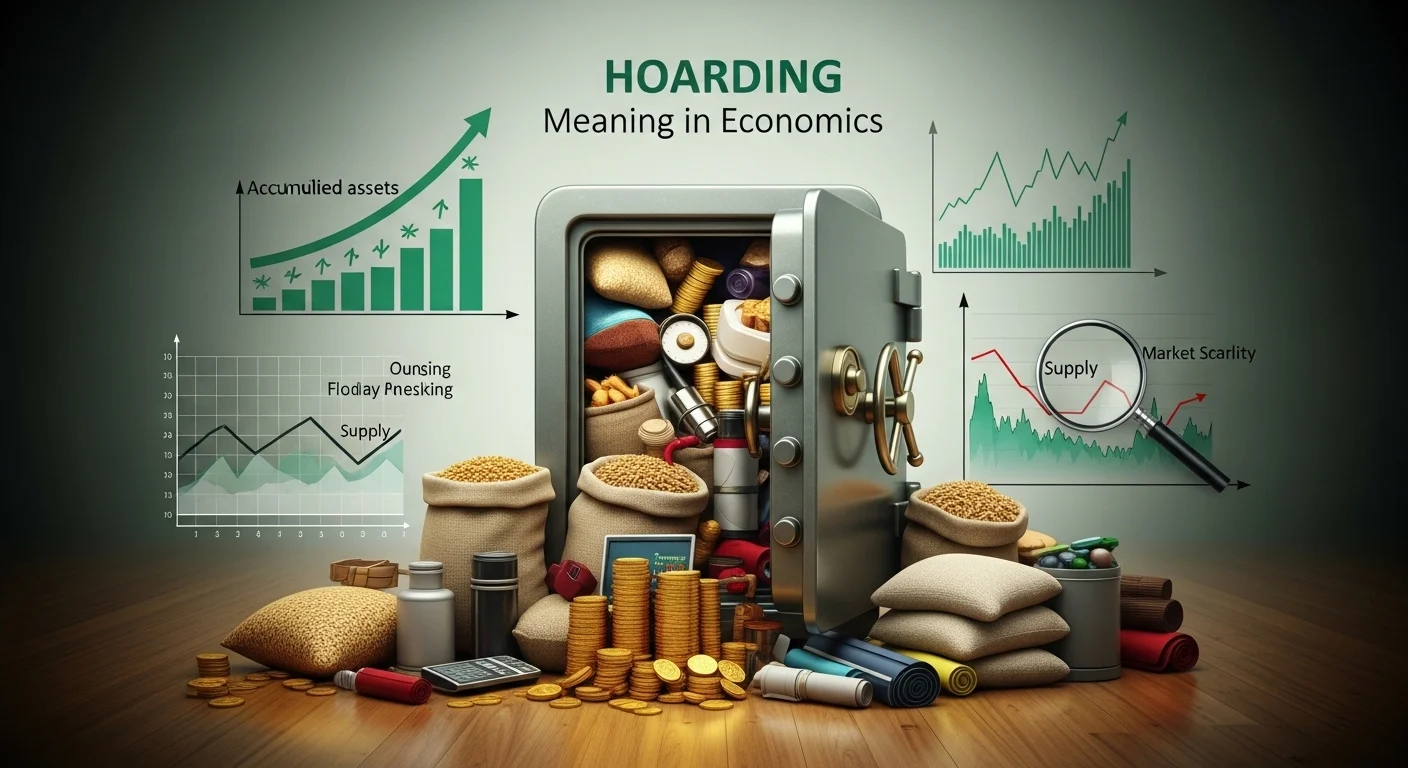
Hoarding Meaning in Economics
Hoarding in economics refers to the practice of accumulating and holding onto goods, money, or resources instead of using or circulating them in the market. This behavior can affect supply and demand, often leading to shortages or price increases. For example, when people hoard essential items during a crisis, it can disrupt normal economic activity and create imbalance in the market. Understanding hoarding in economics helps explain how individual actions can influence larger financial systems.
Hoarding Meaning in Business
In a business context, hoarding usually means stockpiling inventory, resources, or even information for future use. Companies may hoard products to prepare for high demand or avoid supply chain disruptions. However, excessive hoarding can lead to inefficiency, increased storage costs, or wasted resources. Businesses must balance preparedness with smart inventory management to avoid negative impacts.
Hoarding Meaning in Medical
In medical terms, hoarding can relate to a condition where individuals excessively collect items and struggle to discard them, even if they are no longer useful. This behavior can sometimes be linked to mental health concerns and may affect a person’s daily life, hygiene, and safety. Medical professionals view hoarding as a condition that may require support, understanding, and treatment to improve quality of life.
Hording or Hoarding Meaning
The correct spelling is hoarding, not “hording.” While “hording” is a common misspelling, it does not have a recognized meaning in standard English. Hoarding refers to the act of collecting and storing items in large amounts, often beyond what is necessary. Knowing the correct spelling is important for clear communication and proper usage in writing.
Hoarding Meaning Synonyms
Hoarding has several synonyms depending on the context. Common alternatives include stockpiling, accumulating, storing, collecting, saving, and gathering. These words all relate to the idea of keeping or holding onto something in large quantities. Choosing the right synonym depends on whether the context is economic, business-related, or psychological.
Hoarding Meaning in Law
In legal terms, hoarding can refer to the act of illegally storing or withholding essential goods to manipulate supply, especially during emergencies. Laws in some countries prohibit hoarding of items like food, fuel, or medicine when it leads to unfair pricing or shortages. Legal frameworks aim to prevent exploitation and ensure fair access to essential resources for everyone.
Hoarding Meaning in Simple Words
In simple words, hoarding means keeping too many things and not letting them go, even when they are not needed. It can apply to objects, money, or resources. For example, someone who keeps buying items but never uses or throws them away may be described as hoarding. This easy explanation helps beginners understand the concept quickly.
Hoarding Meaning in Psychology
In psychology, hoarding is considered a behavioral condition where a person feels a strong need to keep items and experiences distress when trying to discard them. It is often linked to anxiety, emotional attachment, or fear of losing something important. Psychological hoarding can affect living spaces, relationships, and overall well-being, and it may require professional support to manage effectively.
What Does “Hoarding” Mean in Chat or Text?
At its core, hoarding refers to the act of collecting and keeping things, often in excess, usually beyond what’s necessary or reasonable.
Literal Meaning
Collecting excessively: Traditionally, hoarding describes a person who accumulates items like clothes, gadgets, or food without using them.
Difficulty discarding: It often implies that the person struggles to get rid of items, even if they’re unnecessary or create clutter.
Slang / Online Meaning
In chat or text, hoarding can take on a more playful or metaphorical meaning:
Digital hoarding: Saving a massive number of photos, memes, or files on your phone or cloud storage.
Game hoarding: Stockpiling in-game items, coins, or resources.
Emotional hoarding: Keeping feelings, messages, or inside jokes without sharing them.
Origin
The term comes from the Old English word hord, meaning treasure or store of valuables. Online, it adapted to describe both physical and digital accumulation, blending humor and observation in everyday texting culture.
How People Use “Hoarding” in Real Conversations
Hoarding isn’t just a formal psychology term—it’s part of casual digital conversations now.
Platforms Where You’ll See It
Texting: Between friends or family joking about saving too much stuff.
Instagram & Snapchat: Often used to describe someone who keeps tons of posts, stories, or snaps.
Discord & Gaming: Gamers use it to describe inventory stockpiling.
Forums / Reddit: Used to discuss excessive collecting, from collectibles to memes.
Dating apps: Sometimes mentioned humorously in profiles (“I’m a meme hoarder”).
When It’s Appropriate vs. Awkward
Appropriate: Friendly joking about digital clutter (“I’m hoarding memes like it’s my job”).
Awkward: Labeling someone with severe hoarding habits lightly, which could come off as insensitive.
Tip: Context is everything. Online, hoarding is usually playful; offline, it may be serious.
Real-Life Examples of “Hoarding” in Text Messages
Here are some chat-style examples to make it crystal clear:
Texting Friend:
“Stop hoarding all the stickers! Share some with me!”
Explanation: Refers to digital stickers or emojis saved in messaging apps.
Group Chat:
“He’s hoarding all the game loot again. Can’t get a sword anywhere!”
Explanation: In-game hoarding of items in multiplayer games.
Instagram DM:
“Wow, you’re hoarding screenshots from every concert ever?”
Explanation: Collecting photos excessively.
Humorous Compliment:
“She’s a hoarder… of positive vibes!”
Explanation: Metaphorical, playful use.
Family Chat:
“Mom is hoarding snacks in the pantry like it’s the apocalypse.”
Explanation: Literal hoarding of physical items, common in family jokes.
These examples show that hoarding in chat can be literal, digital, gaming-related, or playful depending on context.
Common Mistakes & Misunderstandings
Confusing hoarding with collecting:
Collectors are organized; hoarders keep excess without order.
Using it only negatively:
Online, hoarding can be humorous or harmless (“meme hoarder”), not always serious.
Misinterpreting tone:
In text, without context, “hoarding” could sound like criticism. Adding emojis or clarification helps avoid confusion.
Mixing with psychological terms:
Clinically, hoarding disorder is serious. Don’t use it lightly when referring to someone with real mental health challenges.
Related Slangs & Abbreviations
Here are some terms often linked to hoarding in digital and social contexts:
Memelord: Someone who collects or creates many memes.
Stacking: Gaming term for saving multiple items or bonuses.
Clout-chasing: Collecting online attention or social status symbols.
Digital packrat: Playful term for someone who saves files, photos, or apps obsessively.