
Levees meaning is more than just a word you stumble across in news or social media—it’s a concept that affects safety, cities, and even everyday conversations. From protecting communities against floods to showing up in metaphorical chats, knowing what levees are can save you from confusion and make you sound way more informed.
Whether you’re scrolling through climate updates, reading a dramatic storm headline, or joking about “emotional levees” in your group chat, understanding the levees meaning helps you catch the real message behind the words. In this guide, we break it all down clearly, with examples, mistakes to avoid, and tips to use the term confidently.
What Does “Levees” Mean in Chat or Text?
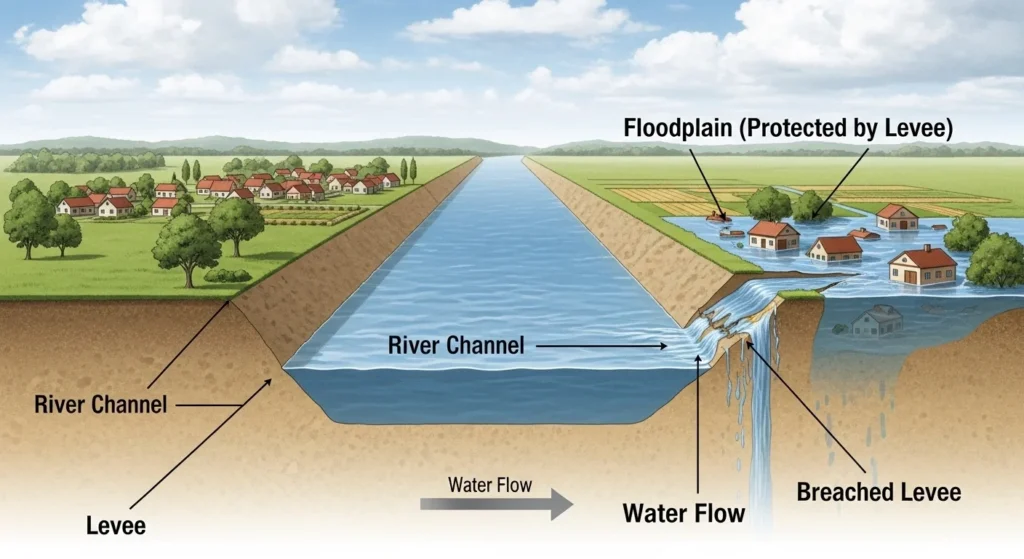
At its core, levees is the plural form of levee, a structure designed to prevent flooding by holding back water.
Basic definition
A levee is:
A raised embankment or wall
Built along rivers, lakes, or coastlines
Designed to stop water from overflowing onto land
So when someone says “levees”, they are referring to multiple flood-control barriers.
Is “levees” internet slang?
No — levees is not slang in the traditional Gen Z or texting sense. However, it does show up in:
News sharing on social media
Climate change discussions
Metaphorical language in chats or forums
For example, someone might say:
“My emotional levees broke today.”
In this case, levees is used figuratively to mean mental or emotional barriers.
Brief origin of the word
The word levee comes from French:
“lever” meaning to raise
Originally described raised riverbanks
Over time, it became a standard engineering and environmental term used worldwide.
How People Use “Levees” in Real Conversations
While levees are a technical concept, people often talk about them casually — especially online.
Common platforms where “levees” appears
News comments on Facebook or X
Reddit threads about weather or climate
YouTube documentaries
Educational TikToks
Casual texting during storms or floods
Literal usage (most common)
Used when talking about real flood protection:
Storm warnings
River flooding updates
Infrastructure failures
Example:
“If the levees fail, the entire area will flood.”
Metaphorical usage (less common, but popular online)
People borrow the word to describe emotional or mental limits:
Stress overload
Emotional breakdowns
Social pressure
Example:
“I’ve been holding everything in, but my levees are cracking.”
When it’s appropriate vs awkward
Appropriate:
News discussions
Educational contexts
Metaphors among fluent English speakers
Awkward:
Casual slang conversations where simpler words work better
Using it without understanding the context
Using “levees” incorrectly can make someone sound confused rather than informed.
Real-Life Examples of “Levees” in Text Messages
Here are realistic, chat-style examples with explanations.
Example 1
Text:
“They’re evacuating the town because the levees might break.”
Meaning:
This refers to real flood defenses being at risk.
Example 2
Text:
“Climate change is putting serious pressure on old levees.”
Meaning:
Talking about aging infrastructure and rising water levels.
Example 3
Text:
“I kept calm all week, but today my emotional levees collapsed.”
Meaning:
A metaphor for losing emotional control after stress.
Example 4
Text:
“The city spent millions repairing the levees after last year’s storm.”
Meaning:
Refers to physical flood barriers, not slang.
Example 5
Text:
“My patience has levees, and you’re testing them.”
Meaning:
Creative but informal metaphor comparing patience to flood barriers.
Common Mistakes & Misunderstandings
Even native English speakers sometimes misuse the word.
1. Thinking “levees” is slang
Many people search “levees meaning slang”, but:
It is not modern internet slang
It’s a real-world structural term
2. Confusing levees with dams
While related, they are different:
Levees run alongside water
Dams block water completely
3. Assuming it only applies to rivers
Levees can protect:
Coastal areas
Lakes
Flood plains
4. Overusing it metaphorically
Metaphors work best when used sparingly. Overuse can sound unnatural.
5. Mispronunciation
Correct pronunciation:
LEV-ees (not “lee-vees”)
Related Slangs & Abbreviations
Although levees itself isn’t slang, it’s often mentioned alongside related terms:
Floodgates – Often used metaphorically like “once the floodgates opened”
Breaking point – Emotional equivalent of levee failure
Dam burst – Dramatic metaphor for sudden release
Overflowing – Used emotionally or literally
Pressure buildup – Common phrase in mental health discussions
Why the Meaning of Levees Still Matters in 2026
With increasing climate awareness, understanding the levees meaning is more relevant than ever.
Levees are frequently mentioned in:
Climate change news
Disaster preparedness plans
Infrastructure funding debates
Educational content online
Knowing what levees are helps you:
Understand news accurately
Avoid spreading misinformation
Use the term correctly in conversation
FAQs About Levees Meaning
What does levees mean in simple words?
Levees are raised walls or embankments built to stop water from flooding land.
Is levees a slang word?
No. Levees is not slang. It’s a real engineering and environmental term, though sometimes used metaphorically.
What does “emotional levees” mean?
It’s a metaphor meaning emotional barriers that prevent feelings from overflowing.
Are levees and dams the same thing?
No. Levees hold water back along rivers, while dams block water entirely.
Why do people search “what does levees mean in text”?
Because the word appears in news headlines, social media posts, and metaphors, confusing readers unfamiliar with it.
Conclusion: Final Thoughts on Levees Meaning
To sum it up, levees are protective structures designed to prevent flooding, not modern slang. However, the word has evolved beyond engineering and is now sometimes used metaphorically to describe emotional or mental limits.
If you’ve ever felt confused seeing the word online, you’re not alone. Understanding the levees meaning helps you read news more clearly, follow climate discussions, and even recognize creative language when people use it metaphorically.
What’s your favorite chat abbreviation or confusing word you’ve seen online lately? Drop it in the comments!