
What Is Spin-Off Series
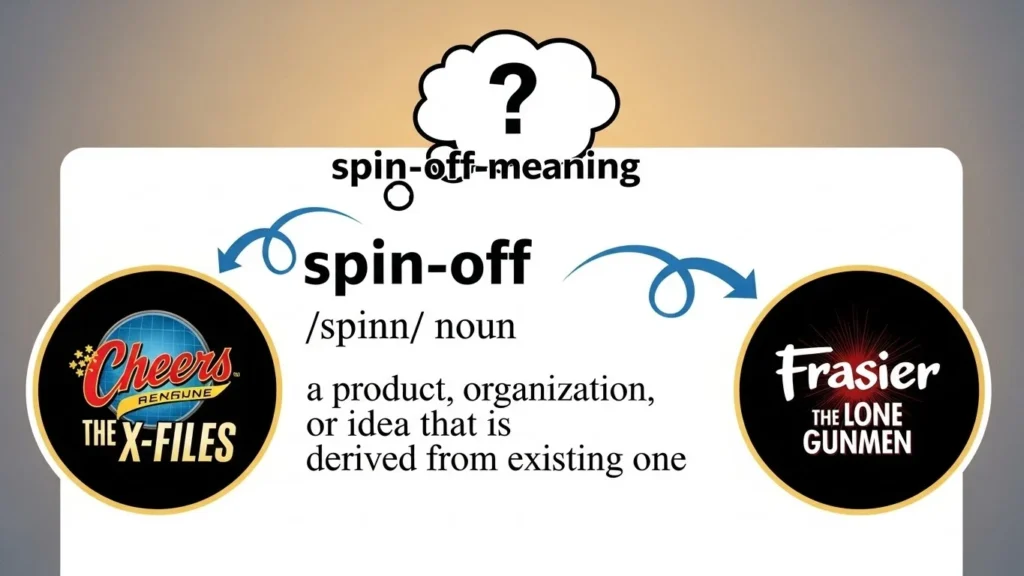
A spin-off series is a television or media show created from an existing series, focusing on characters, events, or storylines from the original. Spin-offs allow creators to explore new perspectives while maintaining the established fanbase.
For example, the TV show Frasier is a spin-off series from Cheers. Spin-offs often provide deeper character development and explore new plots without starting from scratch.
Spin-Off Meaning Movie
The spin-off meaning movie refers to a film that is derived from an existing movie or franchise. It typically focuses on a secondary character, storyline, or theme from the original film, giving audiences a fresh perspective.
A famous example is Minions, which is a spin-off movie from the Despicable Me franchise. Spin-off movies expand the universe of popular films and attract both existing fans and new viewers.
Spin-Off Meaning in Finance
In finance, spin-off meaning refers to a corporate action where a company separates a portion of its business into a new independent company. Shareholders of the parent company usually receive shares in the new entity.
Spin-offs are often done to unlock value, focus on core operations, or allow the new company to pursue independent strategies. This is a common practice in corporate restructuring and investment planning.
Spin-Off Meaning Slang
Spin-off meaning slang is sometimes used informally to describe any situation where something new is derived or created from an original source. For example, a side project or hobby that evolves from a main activity can be called a spin-off.
In casual conversation, it conveys the idea of “offshoot” or “derived version” without the formal media or financial context.
Spin-Off Meaning in Anime
The spin-off meaning in anime refers to a new series or storyline that originates from an existing anime franchise. Anime spin-offs often explore supporting characters, alternative timelines, or backstories not fully covered in the main series.
An example is Attack on Titan: Junior High, which is a spin-off anime based on the original Attack on Titan series. Spin-offs in anime expand the universe and engage fans with new creative content.
Spin-Off Meaning in Chinese
In Chinese, spin-off meaning can be translated as “衍生剧/衍生作品” (yǎnshēng jù / yǎnshēng zuòpǐn), which refers to derived works from an original story, including TV series, movies, or games.
Spin-offs in China are popular in media franchises to explore different characters or storylines while retaining the original audience’s interest.
Spin-Off of Stranger Things
A spin-off of Stranger Things refers to any new show or series created based on the original Stranger Things universe. Spin-offs may explore different characters, locations, or events that were not the main focus of the original series.
For example, Netflix has announced plans for a Stranger Things spin-off series focusing on other mysteries and characters within the same universe.
Spin-Off Corporate Action
A spin-off corporate action is when a company separates a division, subsidiary, or portion of its business into a new independent company. Shareholders usually receive proportional shares of the new entity.
This type of spin-off allows the parent company and the new company to focus on their core operations independently, potentially increasing shareholder value and operational efficiency.
What Does “Spin Off” Mean in Chat or Text?
At its core, spin off means something new that comes from something existing. In chat or text, it usually describes an idea, conversation, joke, or plan that develops from the original topic.
Simple definition:
Spin off = a new thing created from an original thing
Depending on context, spin off meaning in text can include:
A side conversation
A new idea inspired by the original one
A separate project or plan
A related but independent situation
Example in chat:
“That joke kinda spun off into a whole argument.”
Here, spin off means the situation developed unexpectedly from the original joke.
Brief origin & history
The phrase spin off originally comes from manufacturing and physics, where something literally spins away from its source. Over time, it became common in:
Business
TV and movies
Casual conversation
Internet slang and chat culture
Today, it’s fully mainstream — not just slang — but still widely used in informal texting.
How People Use “Spin Off” in Real Conversations
People use spin off in chat across many platforms, but the meaning slightly shifts based on where and how it’s used.
Common platforms where you’ll see it:
Text messages
Instagram comments & DMs
Snapchat chats
Discord servers
Dating apps
Reddit & forums
Workplace Slack chats
Typical ways it’s used:
1. Conversations that go off-topic
When a discussion naturally shifts into something new:
“Our talk about movies spun off into life advice.”
2. Ideas and creativity
When one idea inspires another:
“That concept could spin off into a whole series.”
3. Drama or situations
When something small becomes bigger:
“One tweet spun off into a full-on debate.”
4. Casual explanation tone
People often use it to sound relaxed and conversational rather than formal.
When it’s appropriate vs awkward
Appropriate:
Creative discussions
Media or business conversations
Awkward:
Very formal writing (unless business-related)
When the listener doesn’t understand English well
If overused repeatedly in one message
Spin Off Meaning in Business, TV & Media (Important Context)
Many people get confused because spin off meaning slang overlaps with formal meanings.
In business:
A spin-off is a new company created from a larger company.
Example:
“Google spun off Alphabet as its parent company.”
Here, it means a separate company formed from an existing one.
In TV & movies:
A spin-off show focuses on a character or storyline from an original series.
Examples:
Better Call Saul (spin-off of Breaking Bad)
House of the Dragon (spin-off of Game of Thrones)
Why this matters in chat:
People often borrow these meanings casually:
“That character deserves a spin-off.”
“This idea feels like a spin-off of your last project.”
Real-Life Examples of “Spin Off” in Text Messages
Below are realistic chat-style examples showing how spin off is actually used — plus simple explanations.
Example 1
Text:
“Our group chat spun off into three different arguments.”
Meaning:
One conversation turned into multiple separate discussions.
Example 2
Text:
“That TikTok idea could spin off into a whole channel.”
Meaning:
The idea could grow into something bigger and independent.
Example 3
Text:
“I didn’t mean for it to spin off like that.”
Meaning:
The situation escalated or changed direction unexpectedly.
Example 4
Text:
“This podcast is basically a spin-off of the YouTube series.”
Meaning:
The podcast was created from the original content.
Example 5
Text:
“The joke spun off into chaos.”
Meaning:
A small joke caused a bigger reaction or situation.
Common Mistakes & Misunderstandings
Even though it’s common, people still misuse spin off.
1. Confusing it with American Sign Language
Some users mistake spin off as an abbreviation like ASL.
❌ “Spin off” is not a texting abbreviation
✅ It’s a full phrase with contextual meaning
2. Using it without context
Saying “it spun off” without explaining what can confuse readers.
Better:
“The discussion spun off into a debate about money.”
3. Tone misinterpretation
In text, spin off can sound:
Neutral
Slightly negative
Lighthearted
Without emojis or tone markers, people might misread your intent.
4. Overusing it
Using spin off repeatedly in the same conversation can feel unnatural. Mix it with alternatives.
Related Slangs & Abbreviations (Similar Meanings)
Here are related chat terms that often appear in similar contexts and are great for internal linking:
Branch off – Something splits into another topic
Derail – Conversation goes off track
Escalate – Situation becomes more intense
Snowball – Something grows quickly
Offshoot – A side result of something
Side quest – Internet slang for distractions
Glow-up – When something improves dramatically
Lore – Background story that develops from the main topic
Each of these overlaps with spin off meaning in chat, but with slightly different tones.
What Does “Spin Off” Mean in Text Specifically?
When people search what does spin off mean in text, they’re usually seeing it used casually — not formally.
In texting:
It’s informal
It’s descriptive
It explains how something developed
It’s not an abbreviation
In short:
Spin off in text means something unexpectedly grew, changed, or became its own thing.