
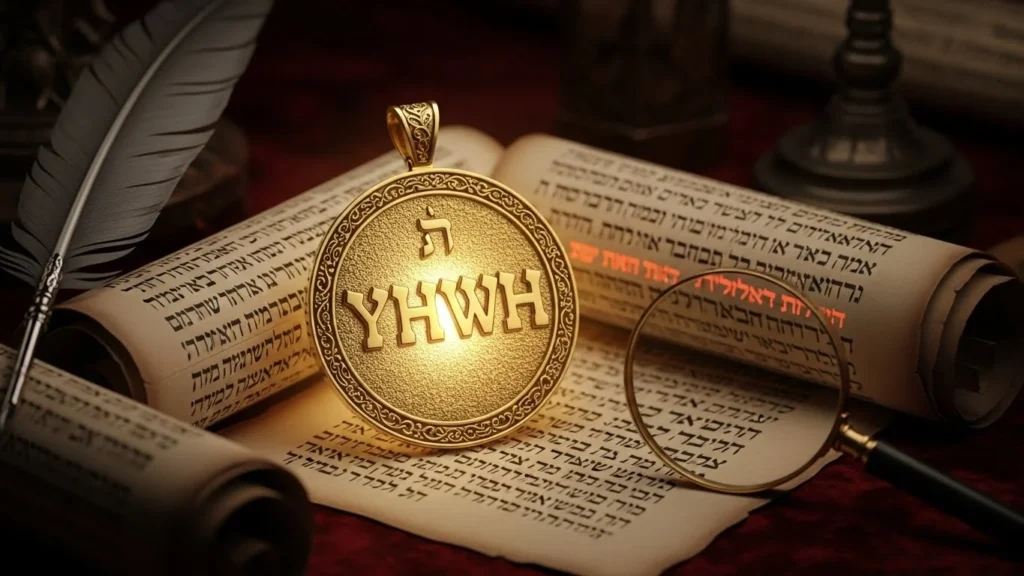
Tetragrammaton Symbol
The Tetragrammaton symbol refers to the four-letter sacred name of God written in Hebrew as יהוה (YHWH). This symbol is one of the most significant representations in religious history, especially in Judaism and Christianity. It is often seen in ancient texts, religious art, and spiritual symbols, representing the divine presence and eternal nature of God.
In many traditions, the Tetragrammaton symbol is treated with deep reverence and respect. It is sometimes stylized in mystical diagrams or protective emblems, symbolizing holiness, divine authority, and spiritual power. Because of its sacred nature, it is rarely spoken aloud and is often replaced with titles like “Lord” or “Adonai.”
What Is Tetragrammaton Used For
The Tetragrammaton is used for representing the personal and sacred name of God in religious texts, prayers, and spiritual practices. In Judaism, it appears frequently in the Hebrew Bible and is central to worship and theology. It signifies God’s eternal, self-existent nature and His relationship with humanity.
Beyond scripture, the Tetragrammaton is also used in religious study, meditation, and symbolic representations. Some traditions incorporate it into amulets or spiritual artwork as a sign of protection and divine connection, though its use is always approached with respect and reverence.
Tetragrammaton Meaning in English
The Tetragrammaton meaning in English is commonly understood as “the four-letter name of God.” It is derived from the Greek words “tetra” (four) and “gramma” (letter). In English translations of the Bible, it is often rendered as “LORD” in all capital letters.
Scholars believe the name may be connected to the Hebrew verb “to be,” suggesting meanings like “I Am” or “He Who Exists.” This interpretation highlights God’s eternal and self-sustaining nature, making the Tetragrammaton a profound theological concept.
Tetragrammaton Prayer
A Tetragrammaton prayer refers to prayers that honor or reference the sacred name of God represented by YHWH. In Jewish tradition, the name itself is not pronounced during prayer; instead, substitutes like “Adonai” or “Hashem” are used out of respect.
In Christian contexts, prayers inspired by the Tetragrammaton often focus on God’s eternal presence, power, and faithfulness. These prayers emphasize reverence, humility, and a deep spiritual connection with the divine.
Tetragrammaton Protection
The concept of Tetragrammaton protection is often found in spiritual and mystical traditions. It refers to the belief that the sacred name of God holds protective power against harm, negativity, or evil influences. This idea is especially present in certain forms of religious symbolism and historical texts.
While not universally practiced, some people use representations of the Tetragrammaton in jewelry, art, or inscriptions as a symbol of divine protection. It serves as a reminder of faith, spiritual strength, and trust in a higher power.
Tetragrammaton in the Bible
The Tetragrammaton in the Bible appears thousands of times in the Hebrew Scriptures, particularly in the Old Testament. It is the most frequently used name for God and plays a central role in biblical theology.
In many English Bible translations, the Tetragrammaton is written as “LORD” in capital letters to distinguish it from other titles for God. Its presence in the Bible emphasizes God’s covenant with His people and His eternal, unchanging nature.
Tetragrammaton Origin
The Tetragrammaton origin can be traced back to ancient Hebrew language and early Israelite religion. It is believed to have been used by the Israelites to refer to their one true God, distinguishing Him from other deities of the time.
Over centuries, the pronunciation of the name was lost or intentionally avoided to maintain its sacredness. This historical development has made the Tetragrammaton both a linguistic and spiritual mystery, studied by scholars and theologians worldwide.
Tetragrammaton in Hebrew
The Tetragrammaton in Hebrew is written as יהוה (Yod-Heh-Vav-Heh). These four letters form the most sacred name of God in the Hebrew language. Each letter carries deep symbolic meaning and is associated with divine attributes and existence.
In Hebrew tradition, the name is considered too holy to be spoken aloud. Instead, readers substitute it with respectful titles during prayer and scripture reading. This practice reflects the profound reverence and spiritual significance attached to the Tetragrammaton in Jewish faith.
What Does “Tetragrammaton” Mean in Text or Chat?
At its core, the word tetragrammaton comes from Greek and literally means “four letters.” It refers specifically to the four Hebrew letters Yod-Heh-Vav-Heh (YHWH) that form the name of God in the Hebrew Bible.
Key points about its meaning:
Literal Meaning: Four letters (tetra = four, gramma = letter)
Religious Significance: Represents the sacred and ineffable name of God in Judaism. Traditionally, it is considered too holy to pronounce.
In Modern English Texts: Sometimes abbreviated as YHWH, Yahweh, or Jehovah.
Origins and History:
The tetragrammaton has been around for thousands of years. Ancient Hebrew scriptures used these four letters as a way to reference God without directly saying the name aloud. Over time, translations and transliterations introduced forms like Yahweh and Jehovah, making it more accessible to readers worldwide.
In online and chat contexts, the term occasionally appears in philosophical or religious discussions, or even in memes referencing sacred texts, mysticism, or historical trivia.
How People Use “Tetragrammaton” in Real Conversations
While the tetragrammaton is mostly a religious or academic term, it does pop up in certain digital spaces:
Texting & Messaging Apps: Usually in deep discussions about religion or history. Example: “I was reading about the tetragrammaton today—YHWH is fascinating!”
Forums & Reddit: Common in threads about theology, philosophy, and biblical scholarship.
Social Media (Instagram, TikTok): Occasionally appears in posts about mystical symbolism or historical insights.
Academic & Study Groups: Students or enthusiasts might discuss the tetragrammaton in context of Hebrew texts or linguistics.
Tips for Chat Use:
Appropriate: Discussions about religion, linguistics, or history.
Awkward or Over-the-Top: Dropping the word in casual memes with no context—it may confuse people.
Friendly Insight: Treat it like a rare vocabulary gem—use it where it adds curiosity or depth.
Real-Life Examples of “Tetragrammaton” in Text Messages
Here are a few examples of how people might encounter or use “tetragrammaton” online or in texts:
Religious Study Context:
Alex: “The tetragrammaton appears over 6,800 times in the Hebrew Bible!”
Sam: “No way, that’s incredible. I never realized it was that common.”
Casual Chat / Fun Fact:
Jamie: “Did you know the tetragrammaton literally means ‘four letters’?”
Taylor: “Mind blown. That’s way cooler than I expected.”
Forum Discussion:
User1: “I read that pronouncing the tetragrammaton was considered taboo in ancient times.”
User2: “Yeah, they’d say Adonai instead!”
Takeaway: These examples show that using “tetragrammaton” doesn’t have to be intimidating—it’s just a word describing a historically and culturally significant name.
Common Mistakes & Misunderstandings
Because “tetragrammaton” is a long and uncommon word, people often stumble over it. Here are some frequent errors:
Confusing It with Acronyms or Chat Slang: It’s not a texting abbreviation or a modern meme shorthand.
Mispronunciation: Some try to say “tetra-gram-maton” incorrectly; the accepted pronunciation is closer to teh-TRA-gram-uh-ton.
Misuse in Casual Conversation: Dropping it into everyday chat without context can confuse people.
Religious Misinterpretation: The tetragrammaton is sacred in Judaism, so avoid using it disrespectfully.
Related Slangs & Abbreviations
While tetragrammaton isn’t exactly a slang term, it intersects with other chat and textual terms in scholarly or spiritual discussions:
YHWH: Abbreviation of the tetragrammaton, often seen in religious texts.
Jehovah / Yahweh: Common English transliterations of the four letters.
ASL in Chat: While unrelated, it sometimes comes up in casual forum discussions about abbreviations.