
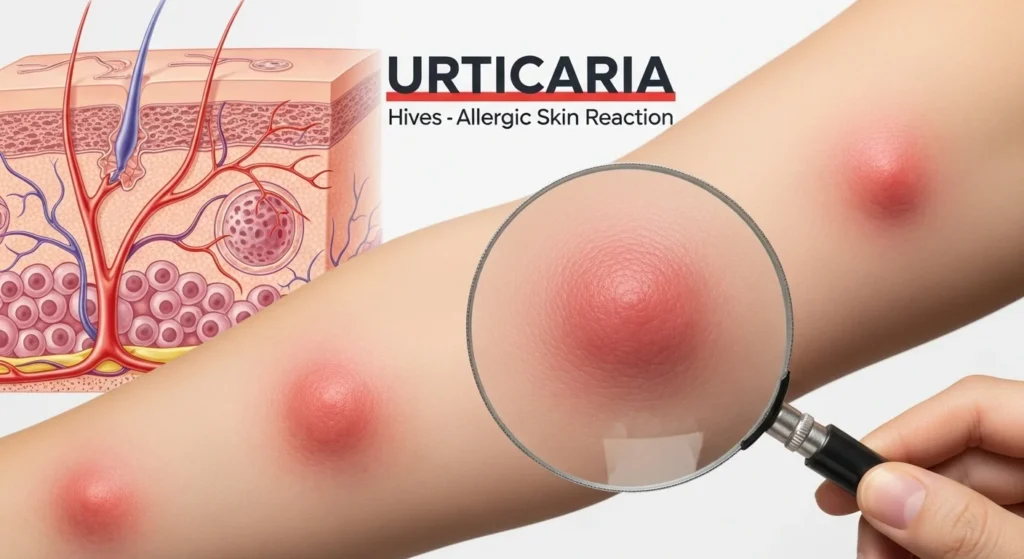
Urticaria meaning is more than a tricky medical term—it’s the key to understanding sudden itchy welts and hives that can disrupt your day. Knowing what urticaria is helps you spot symptoms early, avoid triggers, and communicate clearly with doctors or friends. Whether it’s a mild reaction or a persistent flare-up, understanding the meaning behind the term gives you control over an otherwise frustrating situation.
In everyday life, urticaria often pops up in online chats, health forums, and even casual conversations about allergies or skincare mishaps. From sharing experiences on social media to asking for advice on treatment, people are talking about it more than ever. This guide will break down urticaria meaning, explore causes and symptoms, and provide relatable examples to make this medical term easy to grasp for everyone.
What Does “Urticaria” Mean?
Urticaria is a medical term for a skin reaction that causes itchy, raised welts, often called hives. These welts can appear anywhere on the body and may vary in size, from small dots to large patches.
Types of urticaria:
Acute urticaria – Appears suddenly and usually lasts less than six weeks.
Chronic urticaria – Lasts longer than six weeks and may recur frequently.
Physical urticaria – Triggered by external factors like pressure, cold, or heat.
Origin: The word “urticaria” comes from the Latin word urtica, meaning “nettle,” referencing the stinging sensation that resembles nettle plant contact.
Key points:
Urticaria is not contagious.
It’s an immune system response, often triggered by allergens, medications, or stress.
Can occur at any age, but sudden onset is more common in adults.
How People Use “Urticaria” in Real Conversations
While urticaria is a medical term, it often appears in casual conversations online, especially in health forums, TikTok health clips, Reddit threads, and Instagram Q&A posts.
Common platforms:
Texting with friends: “I woke up with hives… think it’s urticaria?”
Reddit & health forums: People share triggers, remedies, or ask for advice.
Discord & community chats: Casual discussions about allergies or reactions.
When it’s appropriate vs. awkward:
Appropriate: Explaining symptoms to a friend, family, or healthcare professional.
Awkward: Using the term sarcastically or as a random “fancy word” in non-medical chats—it can confuse people.
Pro tip: Use simple terms like “hives” when chatting casually; reserve “urticaria” for medical discussions or when talking to professionals.
Real-Life Examples of “Urticaria” in Text Messages
Here are a few examples of how “urticaria” might appear in real-world conversations:
Friend chat
Friend 1: “Why is your arm all red?”
Friend 2: “It’s urticaria… I think it’s from that new shampoo.”
Reddit post
“I developed urticaria after eating peanuts. Anyone else experience this?”
Medical consultation via text
Patient: “Doctor, I have urticaria and it’s spreading fast. What should I do?”
Doctor: “Take an antihistamine and avoid known triggers. Let me know if swelling worsens.”
Each example shows how urticaria is used to describe a sudden skin reaction, helping people communicate clearly about symptoms.
Common Mistakes & Misunderstandings
Many people get confused about urticaria, often mixing it with other conditions:
Confusing urticaria with a rash: Not all rashes are urticaria. Hives are raised, itchy, and appear suddenly.
Using it for minor irritation: Mild itching without welts isn’t urticaria.
Mispronouncing or overcomplicating: Saying “ur-ti-car-ee-uh” can work, but clarity matters in conversation.
Key takeaway: Always focus on describing the symptoms—itchy, raised, and red welts—to ensure people understand you mean urticaria.
Related Slangs & Abbreviations
While “urticaria” itself isn’t slang, it often appears alongside these terms in online discussions:
Hives – The casual word for urticaria.
Allergic reaction – Often used interchangeably when discussing causes.
Derm – Short for dermatologist; common in health forum chats.
Histamine response – Explains the biological mechanism behind urticaria.
FAQs
Q1: What is the main cause of urticaria?
Urticaria is usually caused by allergic reactions, medications, infections, stress, or physical triggers like pressure or heat.
Q2: How long does urticaria last?
Acute urticaria typically resolves within a few hours to six weeks. Chronic urticaria can last for months or even years with recurring outbreaks.
Q3: Can urticaria be treated at home?
Mild urticaria can often be managed with antihistamines, avoiding triggers, and applying cool compresses. Severe cases require medical attention.
Q4: Is urticaria dangerous?
Most cases are not dangerous, but if swelling occurs around the lips, tongue, or throat, seek immediate medical help, as this may indicate a serious allergic reaction.
Q5: Can urticaria be prevented?
Avoiding known allergens, managing stress, and following your doctor’s advice can help reduce the risk of urticaria outbreaks.
Conclusion
Understanding urticaria meaning is more than memorizing a medical term—it’s about recognizing symptoms, knowing triggers, and communicating effectively in everyday life and online. Whether you’re chatting with friends, asking for advice on forums, or consulting a healthcare professional, this guide ensures you’re confident in identifying and discussing urticaria.
What’s your favorite chat abbreviation? Drop it in the comments!