
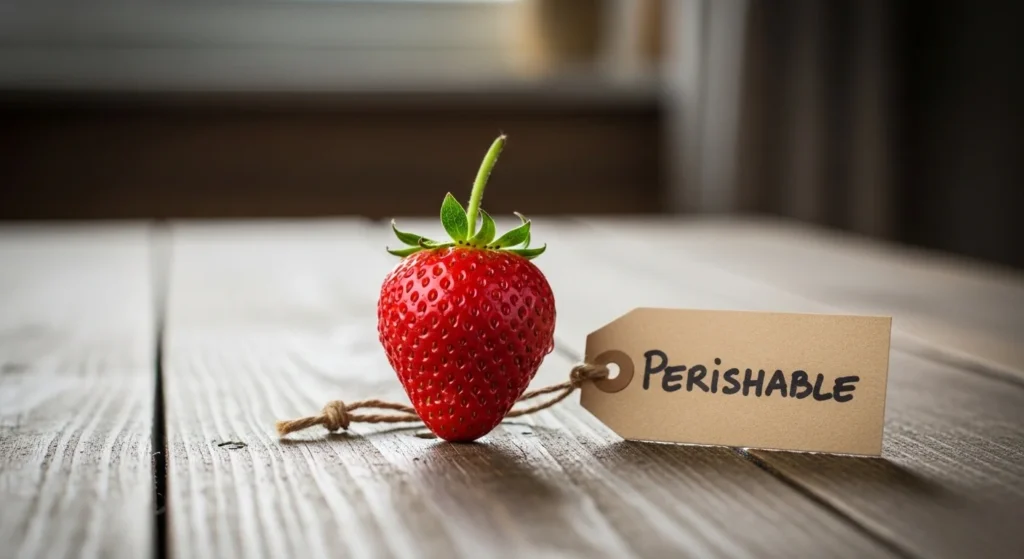

Non perishable meaning
Non perishable meaning refers to items that do not spoil, decay, or go bad quickly over time. These are products that can be stored for a long period without needing special conditions like refrigeration.
Common examples include rice, flour, canned food, pasta, and dry beans. Because they last longer, non perishable items are often used for storage, emergencies, and long-term planning.
In simple terms, non perishable means something durable and long-lasting that remains safe to use or consume even after a long time.
Perishable meaning in English
Perishable meaning in English refers to anything that can easily spoil, decay, or become unusable after a short period. It is commonly used for food and organic products.
Examples include milk, fruits, vegetables, meat, and seafood. These items require proper storage like refrigeration to stay fresh and safe.
In everyday English, perishable simply means something that does not last long and needs quick consumption.
Perishable goods meaning
Perishable goods meaning refers to products that have a short shelf life and can spoil quickly if not stored properly. These goods are highly sensitive to temperature and time.
They include fresh food items like dairy products, fruits, vegetables, and frozen foods. Transportation and storage of perishable goods often require special care, such as cold storage systems.
In simple terms, perishable goods are items that must be used quickly before they go bad.
Perishable meaning in Business
Perishable meaning in Business refers to products or services that lose value if not used or sold within a specific time frame. This concept is very important in industries like food, airlines, and hospitality.
For example, airline seats, hotel rooms, and fresh produce are considered perishable in business because unsold inventory cannot be stored for later use.
In business terms, perishable means time-sensitive assets that require efficient sales and management to avoid loss.
Semi perishable meaning
Semi perishable meaning refers to items that last longer than perishable goods but are not completely non-perishable. They can stay usable for a moderate period if stored properly.
Examples include potatoes, onions, eggs, and some processed foods. These items may not spoil immediately but will eventually degrade over time.
In simple terms, semi perishable means partially long-lasting but still limited in shelf life.
Perishable and non perishable meaning
Perishable and non perishable meaning explains the difference between two types of goods based on their shelf life. Perishable items spoil quickly, while non perishable items last much longer.
For example, milk and fruits are perishable, whereas rice and canned foods are non perishable. This classification helps in food storage, supply chain, and household planning.
In short, perishable means short-life products, and non perishable means long-lasting products.
Perishable meaning in Chinese
Perishable meaning in Chinese is translated as “易腐的” (yì fǔ de), which refers to items that can easily spoil or decay.
It is commonly used in food safety, packaging, and transportation industries to describe fresh goods like meat, fruits, and vegetables. Proper storage is essential to prevent spoilage.
In simple terms, in Chinese, perishable means something that does not last long and requires careful handling.
Perishable synonym
Perishable synonym refers to words that have a similar meaning to “perishable.” Common synonyms include “spoilable,” “decayable,” “short-lived,” and “fragile.”
These words are often used in different contexts depending on formality and usage. For example, “short-lived” is used in general speech, while “spoilable” is more direct.
In simple terms, perishable synonyms describe anything that can easily go bad or lose quality over time.
What Does “Perishable” Mean in Chat or Text?
In everyday English, perishable literally refers to something that spoils or decays quickly, like food. In chat or texting slang, it’s often used metaphorically:
Meaning in text/chat: Something that has a short lifespan, relevance, or usefulness. This can be a joke, gossip, meme, or trend that won’t last long.
Examples of usage:
“That meme is so perishable, it’ll be dead in 2 days.”
“Hot tea is perishable; spill it fast or someone else will.”
Origin and Evolution
The slang usage likely started with internet communities in the 2010s, where discussions of trending content and ephemeral online moments were common. Over time, “perishable” evolved from literal food talk to describing fleeting ideas, trends, or drama.
Key takeaway: In online slang, perishable doesn’t mean “rotten,” it means temporary or quickly outdated.
How People Use “Perishable” in Real Conversations
“Perishable” shows up across a variety of platforms:
Texting: Friends warning each other about gossip or jokes that won’t stay relevant.
Discord/Slack: Gamers or community members pointing out trends or hot topics that expire fast.
Instagram/TikTok/X (Twitter): Memes, stories, or viral content that are here today, gone tomorrow.
Dating apps: Subtle way to describe fleeting interest or fast-moving conversations.
Forums: Users discussing ephemeral news or community drama.
When It’s Appropriate vs. Awkward
Appropriate:
Talking about a trending meme: “This one’s perishable, post it now.”
Sharing gossip before it’s outdated.
Awkward:
Using it for serious or long-term topics: “Our friendship is perishable.” That can sound harsh.
Misusing it with literal food in casual chat—people may take it too literally.
Tip: Use it when something is short-lived, trending, or fleeting. Avoid serious contexts unless you’re joking.
Real-Life Examples of “Perishable” in Text Messages
Here are some scenarios you might actually see in 2026 chat:
Texting a friend about a meme:
Friend 1: “Check out this new meme format!”
Friend 2: “Hurry, that’s perishable, it’ll be dead by tomorrow.”
Discord gaming chat:
“Perishable strats only work for this patch, patch notes came out today.”
TikTok comment section:
“This trend is perishable, post your video before everyone moves on.”
Sharing gossip:
“Hot tea is perishable, spill it before she finds out.”
Dating app:
“Your joke is funny but perishable, I might forget it tomorrow.”
Each example shows how context is key—perishable always points to something temporary or fleeting, never permanent.
Common Mistakes & Misunderstandings
Even slang-savvy users can slip up with “perishable.” Here are the most common errors:
Confusing it with literal meaning: Saying “my milk is perishable” in a chat can sound silly unless you literally mean food.
Wrong tone: Using it for long-term commitments or serious conversations can come off insensitive.
Overusing it: Saying everything is perishable may dilute its meaning.
Misreading context: Not every short-lived thing is perishable—sometimes, people exaggerate.
Pro tip: Only use perishable for humor, trends, gossip, or anything temporary.
Related Slangs & Abbreviations
Here are some similar chat terms and slang that pair well with perishable:
Ephemeral – Literally short-lived; often used for stories on Instagram or fleeting moments.
Disposable content – Posts or memes designed for quick attention.
Hot tea – Gossip or news that’s spicy and urgent.
Fleeting – Another casual way to describe something temporary.
Trending – Popular for a short time; often overlaps with perishable.
